Is FORTEC US a Distributor? What a Value-Added Display Supplier Does
October 29, 2026
By Talisa Westford, Marketing Executive, FORTEC US
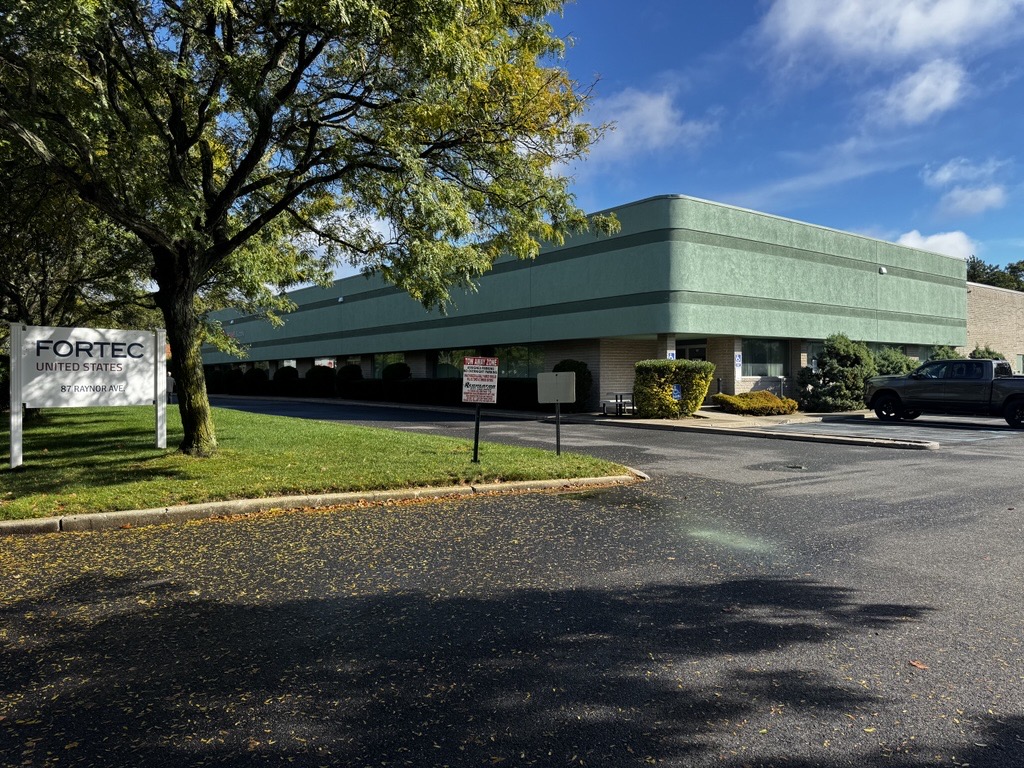
No. FORTEC US is not a distributor. We are a value-added display and embedded systems company: we specify, customize, build, and test display assemblies for the application they go into, in Ronkonkoma, New York. It is a common assumption about us, alongside the ones we answer in Who Is FORTEC US? In fact, we embrace complexity: no design is too custom for us.
“The biggest misconception about FORTEC is that we’re a distributor.”
Scott Makboulian, Managing Director, FORTEC US
What Is the Difference Between a Distributor and a Value-Added Display Supplier?
A distributor sells catalog parts as they come. We start from the application and build for it. That means specifying the panel, the touchscreen, the computer, and the power that suit the job, and changing them where the application calls for it. We deliver them as one solution rather than a list of part numbers.
A distributor’s model works best when the same part ships thousands of times. Ours works best when the application is unusual: an odd size, a harsh environment, or a tight tolerance. Medical and defense projects are a good example. Kyle Rickey, our Head of Engineering and Production, says they have “always got a little wrinkle to them that’s different.” And Scott Makboulian, our Managing Director, says, “We always want to advance our capabilities. So I like taking our projects that are a little bit outside our comfort zone.”
“Innovative technology is not just selling widgets, you’re actually helping to design things.”
Mike Pizzirusso, Head of Product Development, FORTEC US
We also don’t simply fill an order when a purchase order arrives. Engineering reviews every order for accuracy, builds its bill of materials, and draws up the design for that project, which goes back to the customer for approval. Every detail of a build gets scrutinized, so the result meets what the customer expects of it. As Paul Hooper, our other Managing Director, puts it, “We are producing the assemblies, complex assemblies… it takes time for us to put all the parts together.”
What We Build In House
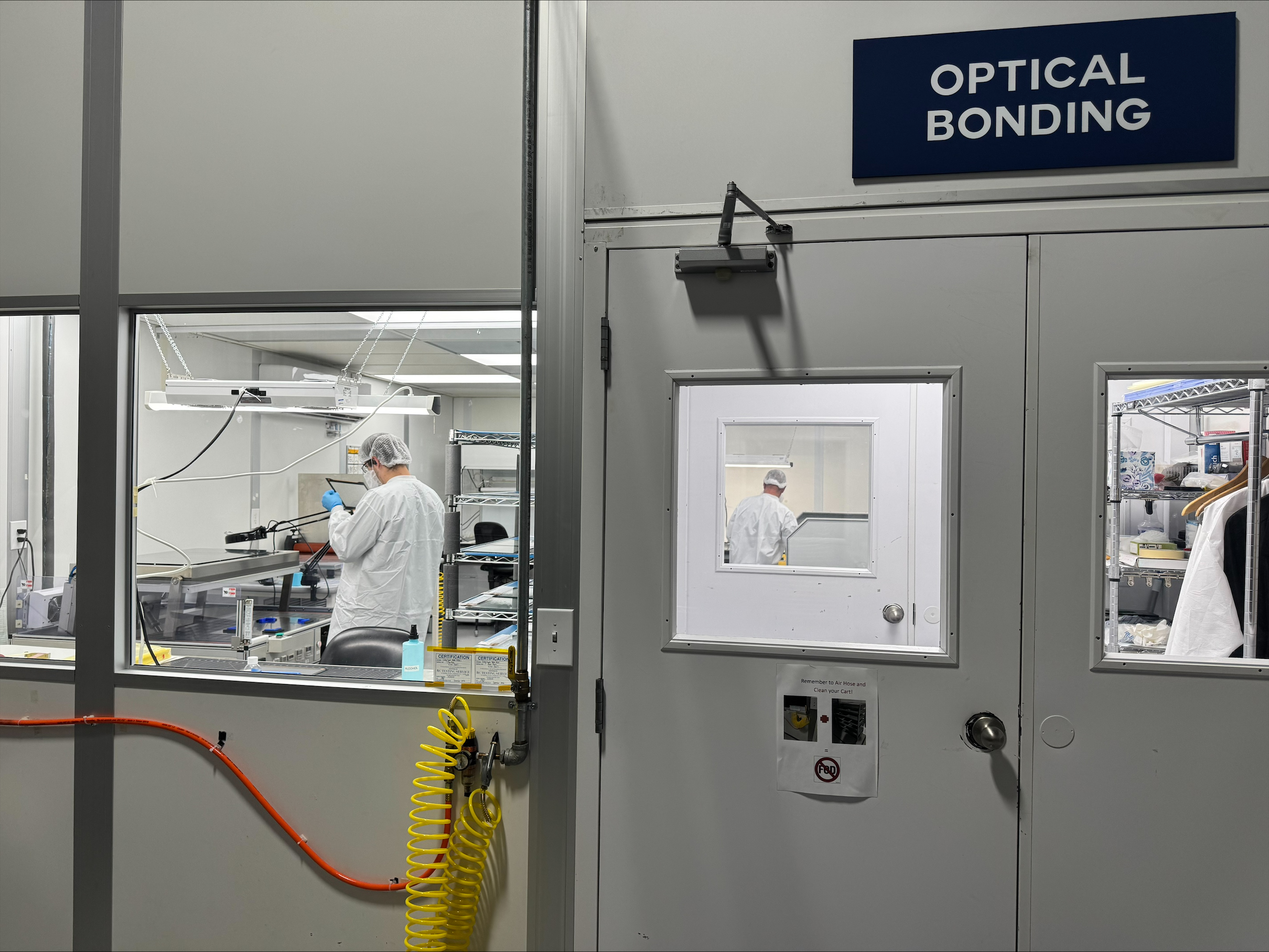
Optical bonding is our main differentiator, and we do it in house with VacuBond® optical bonding. It is a dry process: a ready-formed sheet of silicone OCA is laminated under vacuum, with no liquid, dam, or curing. Our bonding facility in Ronkonkoma has the same capabilities as the FORTEC Group’s in Germany. As Scott puts it, “There’s nothing too custom for us.”
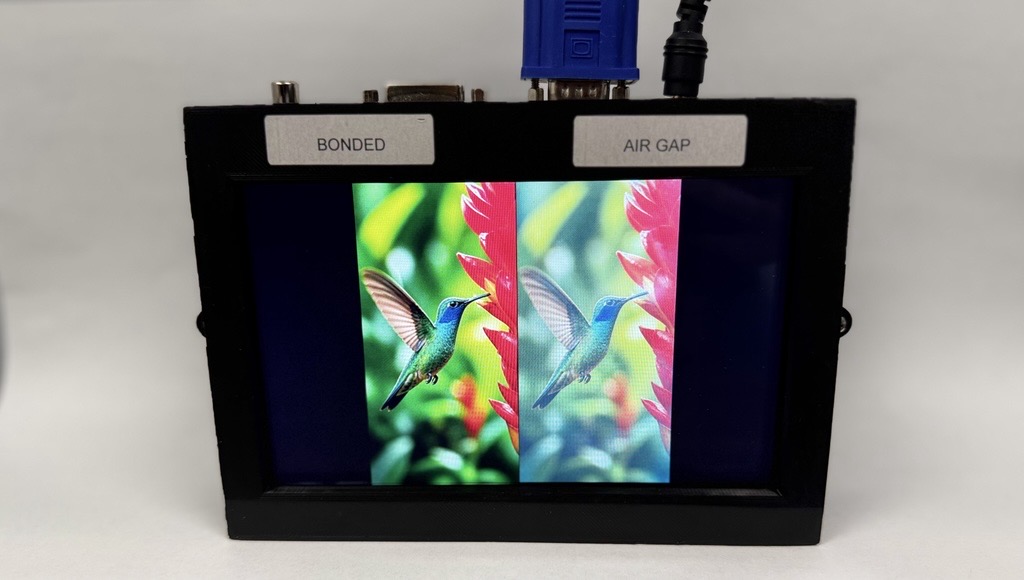
A bonded display can look like a piece of glass glued to a screen. Getting it there is the work. Each bond is done in our clean room on a vacuum machine whose silicone bladder laminates the sheet from the center out. The touchscreen usually overhangs the display, and it cannot shift a millimeter in any direction, because it has to fit the project’s drawing. Every bonded display then goes under heat to bring out any non-conformity and rests for three days, so anything that shows late is caught here rather than by the customer. Bonding also closes the air gap where condensation can form when temperatures swing.
“The customer may not really know what it takes to get that touch screen adhered to the display… There’s a lot that goes into it and that process.”
Robert Opitz, Lead Bonder, FORTEC US
Around the bond, we customize the display assembly for the conditions it has to work in:
- Extended temperature range.
- Ruggedized, more durable builds.
- Touchscreen filters.
- EMI shielding.
These are examples, not limits. We design into whatever context the product requires. Where a project reaches into another FORTEC Group company’s region, or calls for their expertise, we work on it together.
What Does a Complete Display Subassembly Include?
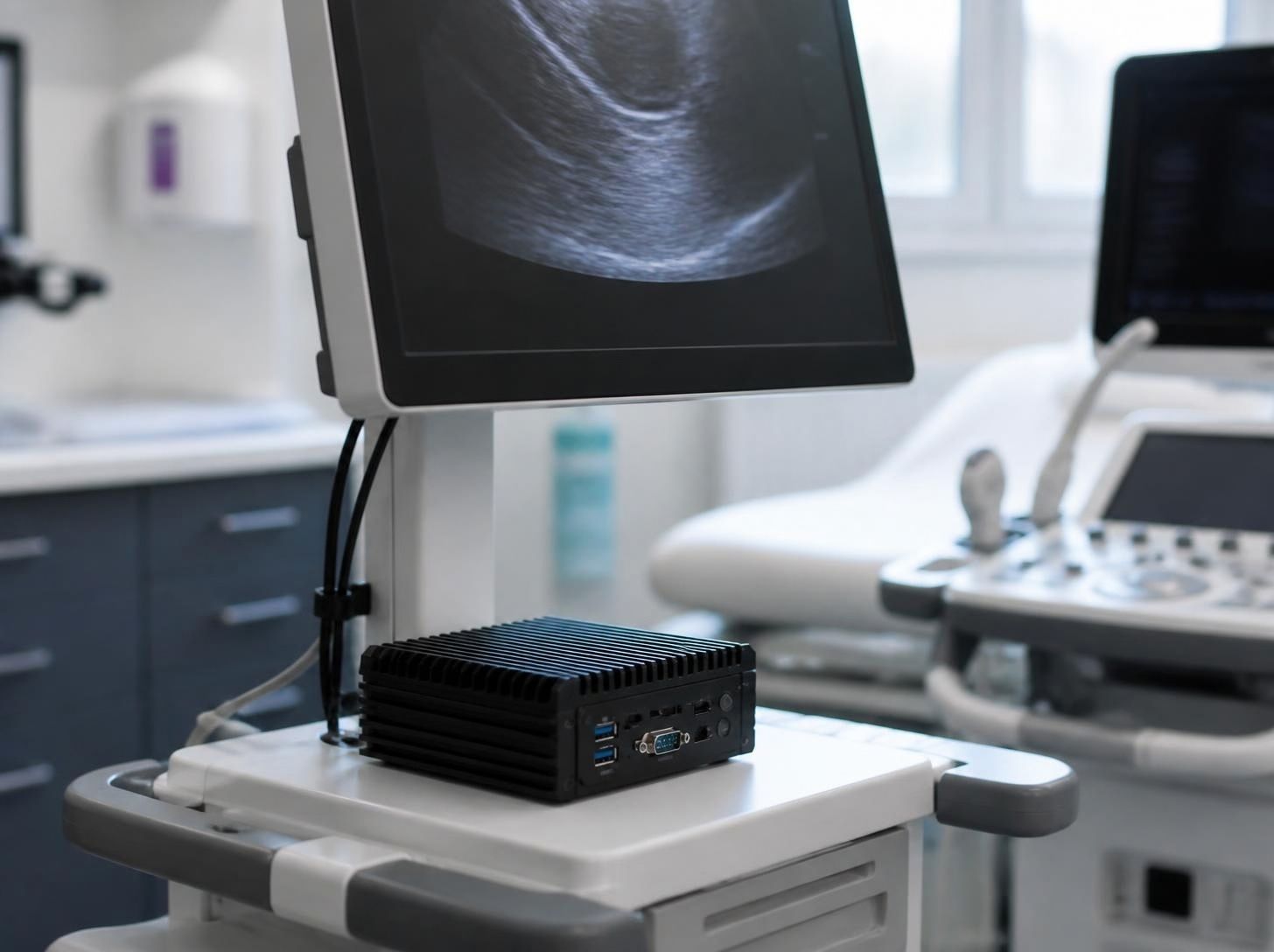
We deliver display-related subassemblies as a complete solution: the display, the touchscreen, the single-board computer, and the power supply. Each one arrives pre-tested and ready for the customer’s contract manufacturer to drop into their assembly.
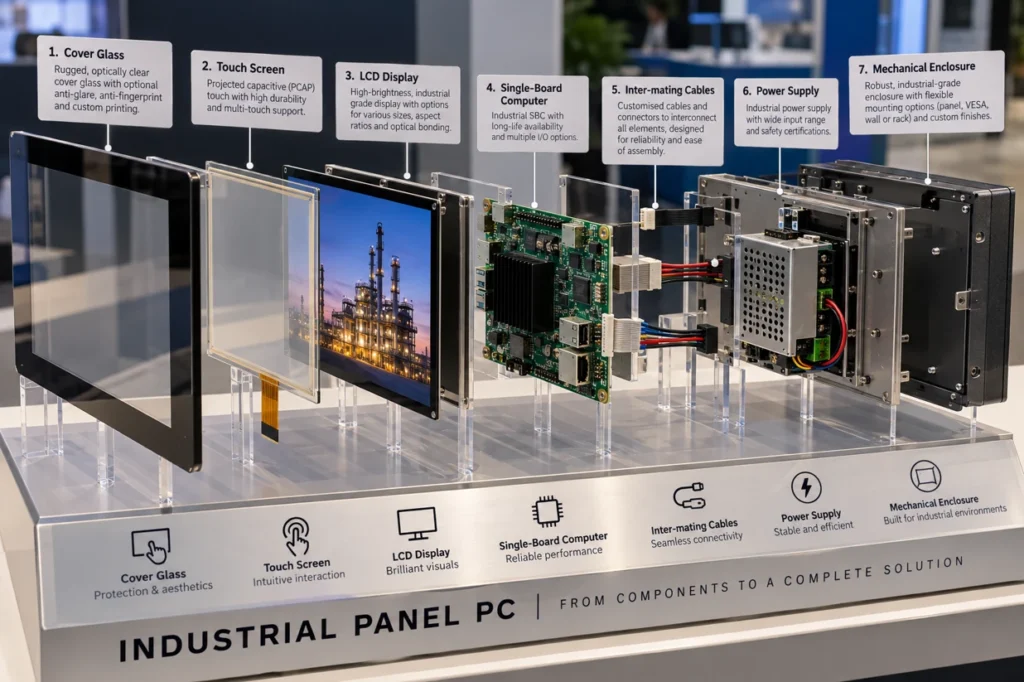
That matters because the parts depend on each other. Customers often choose the embedded processor first and leave the display to the end. Then they find the processor can’t drive it, because spec compatibility wasn’t accounted for. A supplier who understands the whole system catches that early.
Touchscreens carry tight requirements of their own. Noise from RF signals, for example, can cause false and ghost touches, and filtering it out takes back-and-forth on each design.
How We Check Quality
We check parts on the way in as well as on the way out, against a simple standard.
“If something is brand new it should look brand new.”
Doug Ackert, Quality Control, FORTEC US
“99% of the time, if the bond is good here, it will be good with the customer, as long as they don’t break the design rules for mounting.”
Kyle Rickey, Head of Engineering and Production, FORTEC US
The display is not just the face of the product anymore. It has to work, and it has to look good. In medical devices, our displays typically stay in the field for 10 years and more, so both have to hold for that long.
The Volumes We Build
Mass production depends on one design repeated at scale. Our builds are made to each project’s own drawing and spec. They’re bonded in our clean room and inspected by our own QC team, and that work doesn’t repeat on an assembly line. That’s why our sweet spot is 100 to 1,000 units. In Paul’s words, “We supply customers that build in the hundreds and low thousands, not tens of thousands, because that’s the Far Eastern market. And that’s where we’re beautifully positioned because of our capabilities.” We offer complete prototypes, so the whole solution can be tested and verified before production.
When Should You Bring a Display Supplier Into a Design?
Bring a display supplier in as early as possible. Not every display can be integrated into every design. You have to design around the LCD, and that is easier before other design decisions are made. As Mike Pizzirusso, our Head of Product Development, puts it, customers “really need a supplier who understands every part of the system, except for the actual part that they’re doing.”
It isn’t only the display, either. We also supply the embedded computer and the power supply, and bringing us in early is how all three get chosen to work together.
We are often brought in at the beta stage, after prototyping, to solve a problem. That is a common way for a relationship with us to start, and from there we engineer further into the design. But by beta, there are very often specs or designs we would have advised against, and moving a design once money is spent on it is hard. Involving us at the start is how to avoid that.
FORTEC US FAQs
How long does a FORTEC US display prototype take?
Our prototype turnaround is 6 to 8 weeks. From there, we can transition to production with minimal changes.
Which display sizes does FORTEC US sell most?
We sell 7- to 21.5-inch displays most. 7-inch displays have the most options and 10.1-inch the second most, and 15.6 inches is the usual size in medical.
Can FORTEC US ship to our contract manufacturer?
Yes. We can take the order from you as the product owner and ship to your contract manufacturer. The display subassembly arrives pre-tested and ready for the CM to drop into your assembly.
Start a Project with FORTEC US
Send us the application, not a part number. The more complex the brief, the better the fit. Tell us what the display has to do and where it goes. We will specify the panel, touchscreen, computer, and power for it, then build and test them in Ronkonkoma as one subassembly. Contact FORTEC US to start.
Who Is FORTEC US?
October 28, 2026
Which Optical Bonding Material Is Best: Silicone OCA, Acrylic OCA, or LOCA?
October 15, 2026
How Do You Design a Display for Harsh Environments?
October 12, 2026
How to Choose an Edge AI Computer for a Medical Device
September 29, 2026
Embedded PCs vs. Consumer PCs: What’s the Difference?
August 31, 2026

How Hover Touch Technology Can Improve Industrial Interfaces
August 31, 2026