
Back to Blog
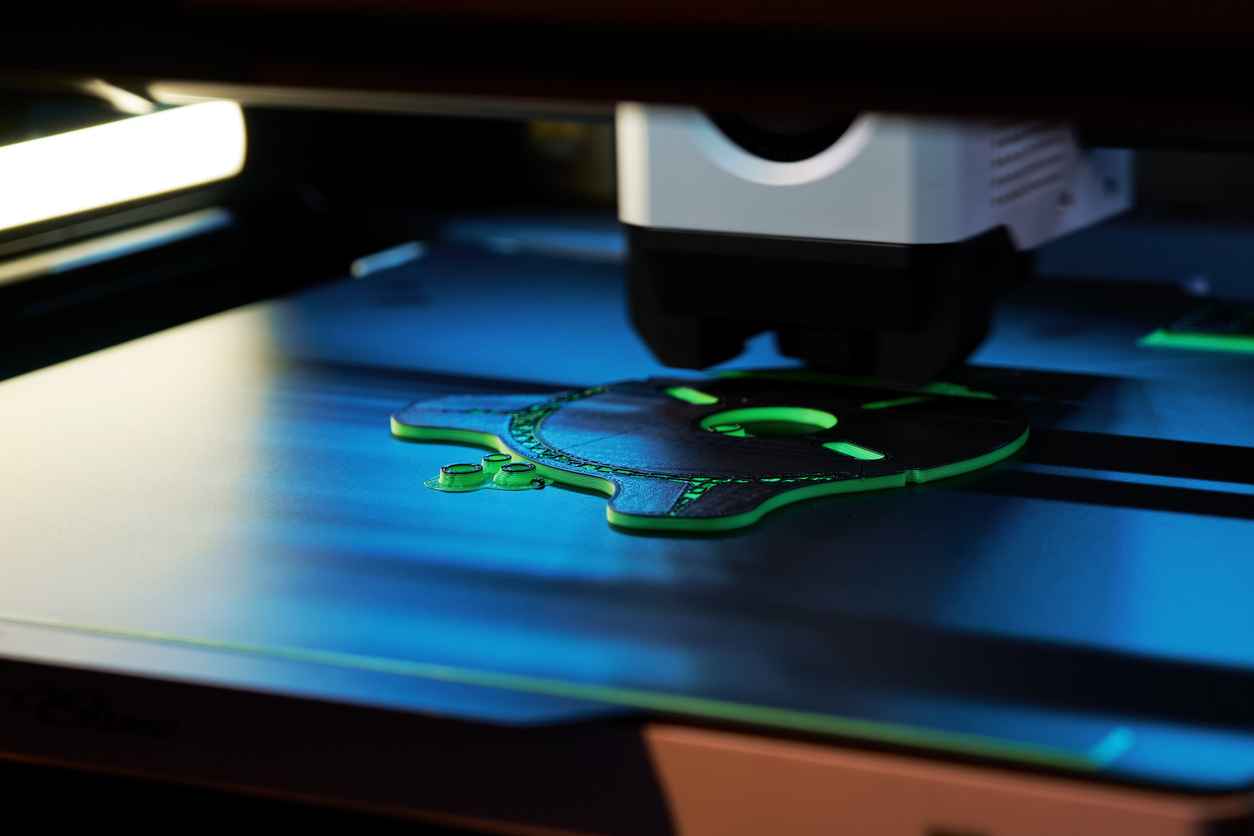
When to Use 3D Printing in Industrial Product Design
July 2, 2026
The Benefits of 3D Printing in Industrial Product Development
Innovation in industrial product design depends on speed, precision, and flexibility. As product development cycles shorten and customer requirements become more specialized, engineers are increasingly turning to 3D printing to streamline the design process.
Once viewed primarily as a prototyping tool, 3D printing has evolved into an essential technology for industrial product development. From creating functional prototypes to producing custom components and tooling, it enables manufacturers to validate designs faster, reduce costs, and accelerate time-to-market.
What Is 3D Printing?
3D printing, also known as additive manufacturing, is the process of creating three-dimensional objects layer by layer from a digital design. Unlike traditional manufacturing methods that remove material through machining, additive manufacturing builds only what’s needed, minimizing waste and allowing for complex geometries.
For industrial engineers, this means greater design freedom and the ability to rapidly produce components that would otherwise take weeks to manufacture.
Rapid Prototyping and Design Validation
One of the most common uses of 3D printing is creating prototypes during the early stages of product development.
Instead of waiting for expensive tooling or production parts, engineers can quickly print prototype components to evaluate:
- Form and fit
- Mechanical functionality
- Assembly compatibility
- Ergonomics
- Overall design performance
This allows teams to identify improvements before investing in production tooling, helping reduce development time and costs.
Custom Components for Specialized Applications
Not every project requires high-volume production. Many industrial applications involve specialized equipment, customer-specific systems, or low-volume manufacturing that requires custom parts.
3D printing is well-suited for producing:
- Custom brackets
- Mounting hardware
- Display bezels
- Prototype enclosures
- Fixtures and assembly aids
- Engineering test components
Because parts can be produced directly from CAD files, modifications are quick and cost-effective.
Supporting Display and Embedded System Development
For companies developing display systems and embedded solutions, 3D printing provides valuable support throughout the engineering process.
Custom printed components can be used to evaluate:
- Display integration
- Housing designs
- Touchscreen positioning
- Optical bonding fixtures
- Mechanical clearances
This allows engineering teams to verify system performance before moving into full production.
Faster Iterations Mean Better Products
Product development rarely follows a straight path. Designs evolve as testing reveals opportunities for improvement. 3D printing enables engineers to quickly modify digital models and produce updated parts within hours instead of weeks.
This rapid iteration process helps:
- Accelerate development
- Reduce engineering delays
- Improve collaboration
- Shorten time to market
The ability to test multiple design options quickly often leads to better-performing final products.
Cost Savings for Low-Volume Production
Traditional manufacturing methods often require expensive tooling, making them impractical for prototypes or small production runs.
Because 3D printing eliminates much of this upfront investment, it offers a cost-effective solution for:
- Prototype production
- Small batch manufacturing
- Customer-specific projects
- Engineering evaluations
- Replacement parts
This flexibility makes it an excellent complement to conventional manufacturing.
Sustainability Benefits
Beyond speed and flexibility, 3D printing can also contribute to more sustainable manufacturing practices. Since material is added only where needed, waste is significantly reduced compared to subtractive manufacturing processes. Many organizations also use recyclable or biodegradable materials for selected applications, further supporting sustainability initiatives.
As industries continue focusing on resource efficiency, additive manufacturing is becoming an increasingly valuable engineering tool.
Partner with Fortec US for Innovative Engineering Solutions
At Fortec US, 3D printing plays an important role in supporting custom display solutions and industrial product development. Using advanced CAD software and modern 3D printing technology, we create precision prototypes, custom tools, and specialized components that help accelerate engineering projects and improve design accuracy.
Combined with our expertise in display integration, optical bonding, embedded systems, and manufacturing, our rapid prototyping capabilities help customers move from concept to production with greater confidence.
Looking to accelerate your next product development project? Contact Fortec US to learn how our engineering and prototyping services can support your success.
What Is an Embedded System?
August 7, 2026
Top Five Benefits of Optical Bonding
August 5, 2026

Common Display Challenges in Industrial Environments
July 31, 2026

Why Multi-Factor Authentication Matters More Than Ever
July 2, 2026
How 4K Digital Microscopy Improves Display Quality Control
July 2, 2026

How Energy-Efficient Display Technology Reduces Industrial Power Consumption
June 8, 2026