Which Industries Does FORTEC US Serve?
November 3, 2026
By Talisa Westford, Marketing Executive, FORTEC US
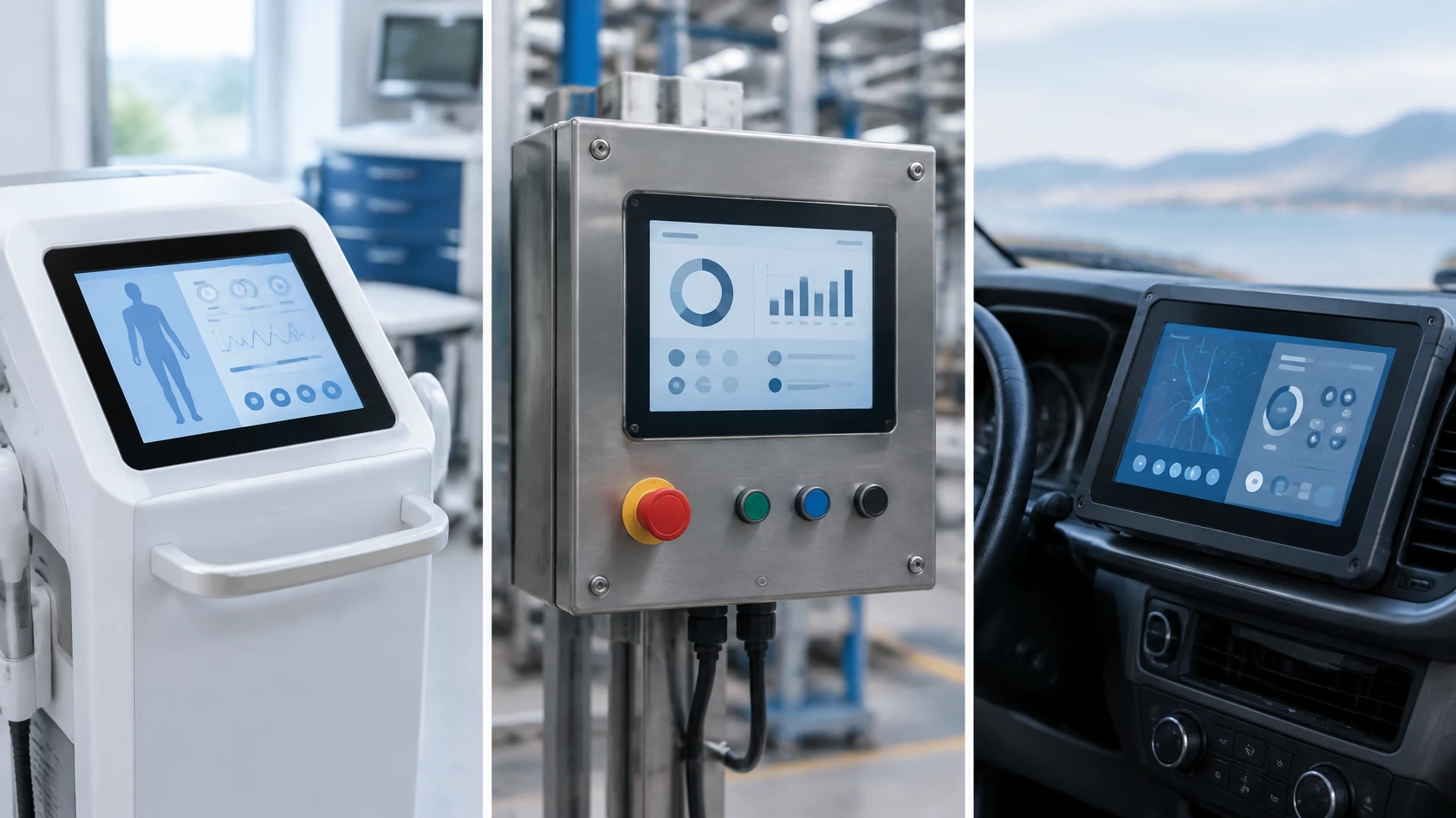
FORTEC US serves equipment makers in the Medical, Industrial, Defense, and Audio and Lighting Control industries, designing and building their display systems, and we also engineer for Transportation. Each sector asks something different of a display, so we start from where the equipment has to work. For who we are and how we work, see Who Is FORTEC US?
“We make screens that aren’t typically on a phone. They’re more for medical, defense, and industrial applications.”
Stephen Zanca, Internal Sales Engineer, FORTEC US
What These Industries Have in Common
They build equipment for demanding environments and long service lives. Most of it needs a display, a computer to drive it, and power. Sourcing each separately can mean three vendors, three lifecycles, and three sets of interface problems.
We engineer and manufacture all three as one system in Ronkonkoma, New York, and validate it as an assembly rather than as parts. Where the display has to stay readable, we bond it in house with VacuBond® optical bonding, which removes the air gap between the display and the cover glass.

Medical Devices
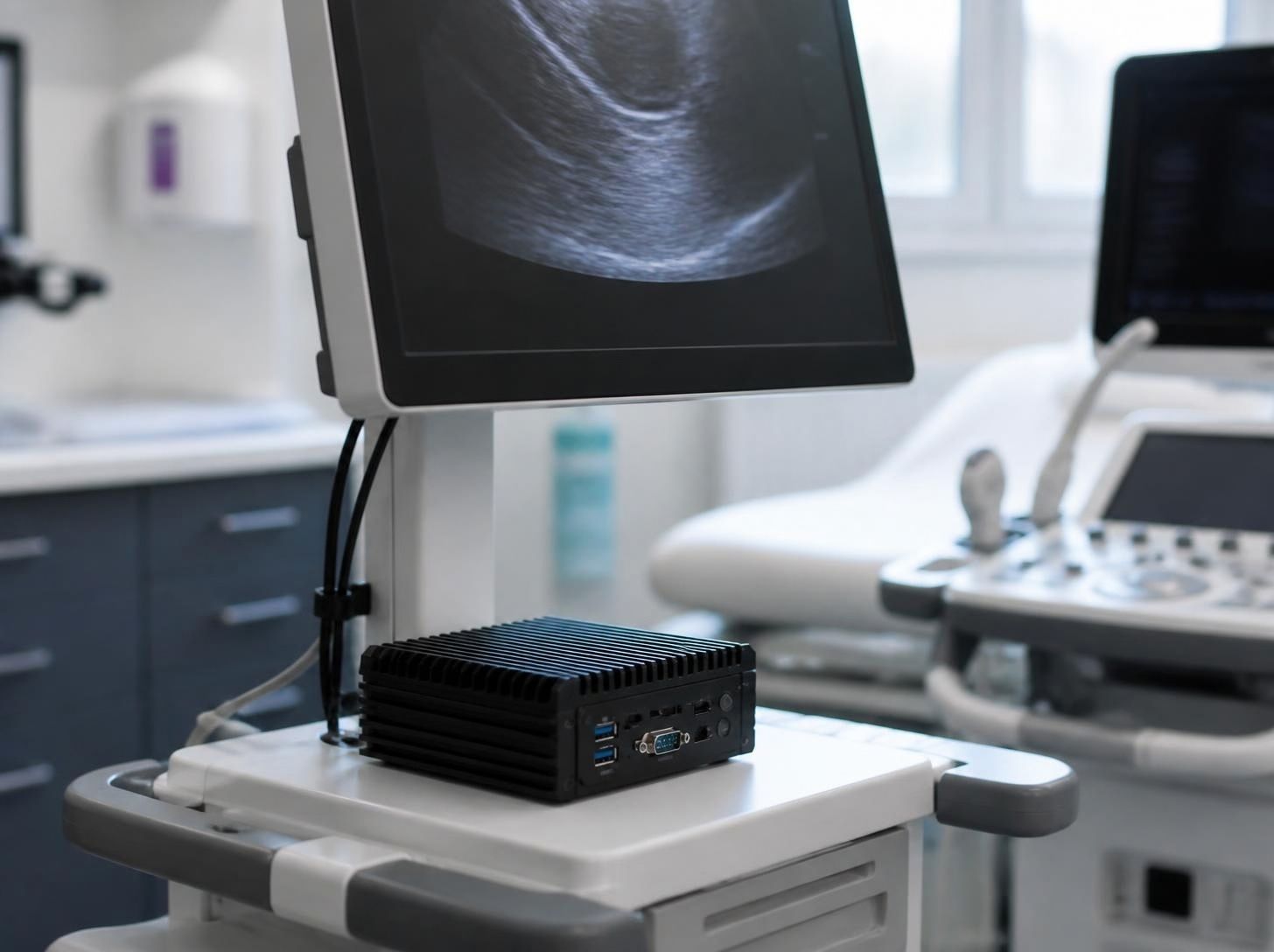
For medical devices, we build optically bonded displays, panel PCs, and embedded systems for imaging, diagnostic, and point-of-care equipment. Medical electronics often stay in service for long product lifecycles, so a component change can mean re-validating the device. We plan for that with controlled change notification and obsolescence management.
“…Testing and getting the certifications takes three to five years. And we understand how expensive it is to put through a product. So we’re not going to recommend something from a consumer panel lineup that’s going to be gone in six months.”
Jackie Hatfield, Regional Sales Engineer (West), FORTEC US
Our medical displays, panel PCs, and embedded systems can be configured with:
- Antibacterial touch films and chemically resistant cover glass.
- IP65-rated options for devices that are cleaned down.
- PCAP or resistive touch configured for gloves, saltwater, and blood exposure.
- Fanless designs where airflow is restricted.
“I like working on medical projects, because it feels like we’re doing good for society.”
Doug Ackert, Quality Control, FORTEC US
Industrial Equipment
For industrial equipment, we build wide-temperature displays, panel PCs, and industrial power for automation, machine control, and inspection. On a production line, a failed display can cost far more than the display itself, especially when downtime stops production.
Our industrial displays, panel PCs, and embedded systems are specified around the application from the outset, with fanless designs, IP-rated bezels, and continuous-duty requirements. Long product lifecycles and proactive obsolescence management keep them supportable long after the first production run.
Defense Programs
For defense programs, we build ruggedized display assemblies, embedded computing, and power for vehicle, command, and communications platforms. We take shock and vibration, EMI, and night-vision requirements into account from the specification stage, where they apply.
A ruggedized display is not a panel with a stronger frame. It is a system made up of:
- A bonded optical stack.
- A backlight selected for the required brightness and dimming range.
- A stable controller.
- Thermal management suited to the enclosure.
- Power designed around the platform input.
Our ruggedized defense displays and embedded systems include NVIS-capable and EMI-shielded options, and FORTEC US is SAM.gov registered.
Kyle Rickey, our Head of Engineering and Production, likes working on medical and defense projects.
“They’ve always got a little wrinkle to them that’s different, and they’re the most intensive.”
Kyle Rickey, Head of Engineering and Production, FORTEC US
Audio and Lighting Control
For Audio and Lighting Control, we build displays, embedded computing, and power for lighting consoles, show control desks, and venue systems. These systems run in front of an audience, often for years at a time.
The display inside a professional console rarely comes straight off the shelf. The panel layout drives the design: non-standard sizes, custom cover glass, bonded front surfaces, and touch. Our audio and lighting displays and embedded systems are built around the enclosure, with power specified for continuous duty.
Transportation
We also engineer displays, embedded computing, and power for Transportation, including passenger information, vehicle systems, and ticketing. Transportation shares many of its engineering challenges with the sectors above.

Outdoor readability draws on the same optical expertise we use in high ambient light. Vibration, temperature cycling, and rugged computing draw on our industrial and defense work. Our transportation displays and embedded systems bring high-brightness display assemblies, fanless embedded computing, and wide-input power together.
Products Outside These Sectors
These sectors are examples, not limits: we design into whatever context the product requires. Where a project reaches into another FORTEC Group company’s region, or calls for their expertise, we work on it together.
What We Need to Know to Design for an Application
We need to know where the display has to work and what it has to do there. Tony Uhrick, Regional Sales Engineer (Central), opens a new project with questions like these:
- Where is the display going, and what is the environment?
- Is it on a transportation device, and does it face shock and vibration?
- What size display, and which connectors does it need?
- How is it interfacing with the rest of the system?
- What problem are you looking to solve, and is it new or existing?
- Are there any in the field now?
- How many do you need?
The questions are a starting point, not a script.
“You kind of follow the customer’s lead. Everything is so customized.”
Jackie Hatfield, Regional Sales Engineer (West), FORTEC US
We turn the answers into the design, so the customer does not have to work out the specification alone. Our guide to designing a display for harsh environments shows how the environment shapes the display assembly.
FORTEC US Market Sectors FAQs
Are FORTEC US display systems made in the USA?
Yes, our display systems for US customers are Made in the USA. We bond, integrate, configure, and test them in Ronkonkoma, New York, rather than shipping them through as stock.
Which compliance declarations can FORTEC US provide?
We provide RoHS, REACH, Conflict Minerals, Proposition 65, and PFAS declarations on request. Our quality system is registered to ISO 9001:2015, certificate US3606.
Which interfaces do FORTEC US display systems use?
Our systems connect over LVDS, eDP, HDMI, DisplayPort, USB, I2C, or PMBus. Which ones a design uses depends on the display and the computer driving it.
Does FORTEC US make sunlight-readable displays?
Yes, we build high-brightness display assemblies for outdoor readability. VacuBond optical bonding also helps, because it reduces internal reflections.
How does FORTEC US handle end-of-life components?
When a part receives an end-of-life notice, we tell the customer early and plan with them. That can be a last-time buy to cover the remaining builds, or qualifying a replacement before supply runs out.
Start a Project with FORTEC US
Tell us which sector the product is for and where it has to work. We will start from what that environment demands. That might be the cleaning regime of a medical device, the temperature and vibration of a production line, or keeping a transportation display readable in sunlight. Contact FORTEC US to start.
Bringing AI to the Point of Care: Does Your Next Medical Device Need an NPU?
November 2, 2026
What Does the FORTEC Group Mean for US Customers?
October 30, 2026
Is FORTEC US a Distributor? What a Value-Added Display Supplier Does
October 29, 2026
Who Is FORTEC US?
October 28, 2026
Which Optical Bonding Material Is Best: Silicone OCA, Acrylic OCA, or LOCA?
October 15, 2026
How Do You Design a Display for Harsh Environments?
October 12, 2026