
How Do You Integrate a Small MIPI Display into an OEM Device?
June 13, 2018
A small MIPI display is integrated into an OEM device through a bridge board that converts the system’s LVDS or HDMI output into MIPI-DSI, mounted directly on the back of the panel. Our PrismaMIPI controllers do exactly that, with a baseboard adapted to the specific display. We supply them from Ronkonkoma, New York, as part of a complete display assembly with the panel, the touchscreen, the cover glass and the cables.
Why do small high-resolution displays use MIPI?
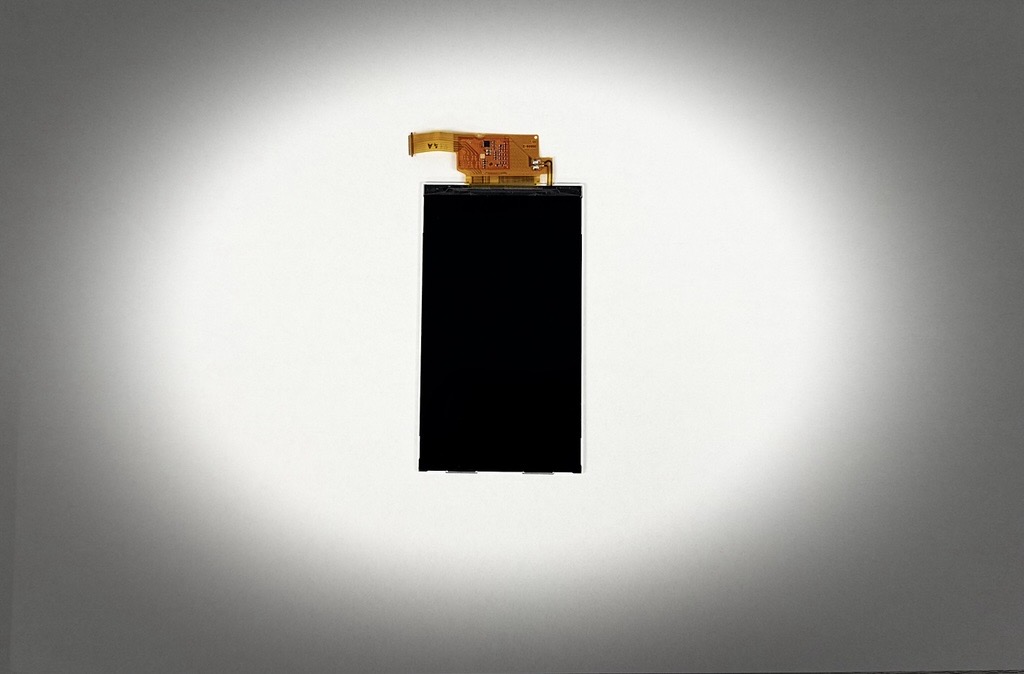
Because LVDS is too inflexible for compact panels at high resolution. The MIPI Alliance developed the MIPI Display Serial Interface (MIPI-DSI), an energy-efficient high-speed interface with low susceptibility to interference, and it is now common on TFT displays with small diagonals and resolutions from 720 x 1280. The panels are thin as well: the 5-inch MIPI panels we have offered measure 1.75 to 1.9 mm deep. The difficulty is that the computers and controller boards in most industrial devices output LVDS or HDMI, not MIPI-DSI.
How does a PrismaMIPI controller work?
Each PrismaMIPI controller pairs a baseboard adapted to the specific TFT display with a bridge module that converts the input to MIPI-DSI. The board is assembled on one side only, so it mounts flat on the back of the display and adds little to the depth of the assembly. Because only the baseboard changes from panel to panel, a PrismaMIPI can be developed for almost any MIPI display quickly and at low development cost.
- PrismaMIPI-LVDS (current): single or dual LVDS to MIPI-DSI, VESA and JEIDA formats, for 720 x 1280 and 1080 x 1920 panels, -20 to +70°C.
- PrismaMIPI-HDMI (discontinued): HDMI 1.4/2.0 to MIPI-DSI, burst and command mode, up to 1920 x 1200, -20 to +80°C. It also made it easy to drive a MIPI panel from a Raspberry Pi. For an HDMI source today, tell us the display and we will propose the current route.
What does a complete MIPI display assembly include?
Usually the panel, the PrismaMIPI controller, a matching PCAP touchscreen, a cover glass and every cable, delivered as one plug-and-play kit. Two earlier kits show how far that goes:
- A 5-inch AUO panel with 720 x 1280 resolution, 1.75 mm deep, with an 89° viewing angle in all directions, -20 to +70°C operation and low power consumption for mobile and battery-powered devices. For outdoor use we offered it with a custom-printed cover glass, bonded with our VacuBond® optical bonding process.
- A 5.5-inch full HD (1920 x 1080) panel, 1.9 mm deep, for which we developed a dedicated 5.5-inch PCAP multi-touchscreen, the TP-DD0546-A01, with chip-on-flex and both I²C and USB interfaces. Its front glass could be customized in size and shape, with colored printing or a logo.
Both panels are now end-of-life, as are three of the four panels the PrismaMIPI was first configured for. The Ortustech line is the latest example: our product pages note that production of ORTUSTECH displays is ending, with a last order date at the end of October 2026. This is why we treat the panel choice and its lifecycle as part of the design. Our obsolescence management covers last-time buys and qualifying compatible replacements, and because the PrismaMIPI baseboard is adapted per display, moving to a new panel does not mean starting the electronics over.
The PrismaMIPI family comes from FORTEC Integrated (formerly Distec), our sister company in Germering, Germany, within the FORTEC Group. For the rest of the Prisma range, see what a Prisma TFT controller does.
Tell us the size, resolution and environment your device needs, and we will take it from there. We select the panel, adapt the PrismaMIPI to it, add the touch and cover glass, and stay with the project from first samples to series production, backed by our technical services.