IBASE ASB110-PI900: When the Computer Needs to Disappear Into the Application
November 11, 2026
By Mike Pizzirusso, Director of Business Development, FORTEC US
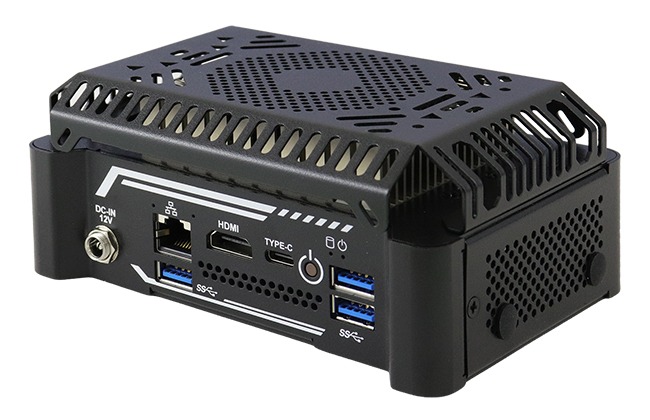
The IBASE ASB110-PI900 is a palm-sized edge AI computer that runs AI inference on its Intel® Core™ Ultra processor, built for equipment with very little room for a computer. IBASE, one of the embedded computing manufacturers we work with, launched the ASB110-PI900 on Oct 29, 2026, and we can supply it and integrate it into your system.
Having spent a good portion of my career as an applications engineer, I tend to look at an embedded computer from the perspective of the engineer who has to fit it into the finished product.
Performance matters, of course. But sometimes the bigger engineering question is much more basic:
Where am I going to put the computer?
That becomes increasingly important as OEM equipment gets smaller while being asked to do more. We want higher-resolution displays, more sensors, faster communications, local data processing, and now AI inference, but nobody is volunteering to make the enclosure larger.
That’s what makes the IBASE ASB110-PI900 interesting.
ASB110-PI900 Specs: The Value Is Computing Density
At just 140 x 95 x 60 mm, this is legitimately a palm-sized embedded computer. Inside that footprint, IBASE has built a system around its PI900F Pico-ITX motherboard. It runs an Intel Core Ultra 5 125U or Core Ultra 7 155U processor with up to 48 GB of DDR5-5600 memory.
But again, the processor specification isn’t the part I find most interesting.
We’ve been putting increasingly powerful processors into increasingly small embedded systems for years. What changes the conversation with the ASB110-PI900 is the combination of size, Intel Core Ultra architecture, and integrated AI acceleration.
The underlying PI900 platform combines CPU, GPU, and NPU processing. That provides engineers with different compute resources for conventional applications, graphics, and AI workloads, without automatically adding a discrete GPU or AI accelerator.
That matters in a small embedded system.
A discrete accelerator doesn’t just consume PCB space. It can affect power consumption, thermal design, enclosure size, and ultimately BOM cost. If the AI requirement is relatively modest, an NPU already integrated into the processor can be a much simpler engineering solution.
That’s where I think engineers need to resist the temptation to start the conversation with TOPS.
The better question is:
What are you actually asking the system to do?
You may be analyzing a few camera images, performing object classification, monitoring equipment for abnormal conditions, running a locally trained model, or adding intelligence to a self-service system. If so, you may not need a massive GPU.
You may simply need enough AI capability in a package that actually fits.
ASB110-PI900 I/O: Think About the Entire System
Putting processing power into a small box doesn’t help very much if the system can’t connect to the rest of the application.
The ASB110-PI900 provides HDMI, DisplayPort through USB Type-C, three USB 3.2 ports, and 2.5GbE Ethernet. It also incorporates two M.2 interfaces, with an E-key M.2 2230 slot for optional Wi-Fi/Bluetooth and an M-key M.2 2280 interface supporting NVMe or SATA storage.
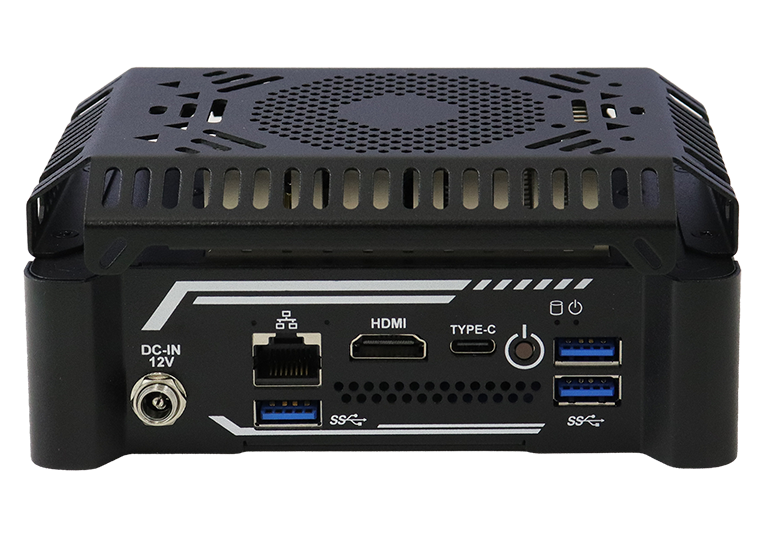
That’s a useful combination for a surprisingly broad class of equipment.
Think about a self-service kiosk, for example. The PC may need to drive a display while communicating with a touchscreen, scanner, camera, payment peripheral, and network connection. There may be virtually no room inside the enclosure allocated to the computer.
Or consider a piece of industrial equipment where a camera is being added for inspection. Processing the images locally can potentially eliminate the need to send all that data elsewhere for analysis.
Those are the types of applications where a palm-sized Core Ultra system starts becoming more than just an interesting small computer.
What Is the ASB110-PI900 Best For?
I see the best fit in kiosks and self-service equipment, medical and laboratory equipment, machine vision, retail analytics, and equipment monitoring. Each of them has more computing to do than room to do it.
Kiosks and Self-Service Equipment
Ticketing systems, check-in stations, ordering kiosks, and specialized self-service terminals increasingly incorporate cameras, touchscreens, and analytics. The system supports dual-display capability through HDMI and DisplayPort over USB-C, while USB and Ethernet provide interfaces for the peripheral devices common in these systems. IBASE specifically identifies smart kiosks, retail terminals, and intelligent self-service terminals among the target applications.
Medical and Laboratory Equipment
This is another area I find interesting, because a large portion of our business at FORTEC US is in the medical industry.
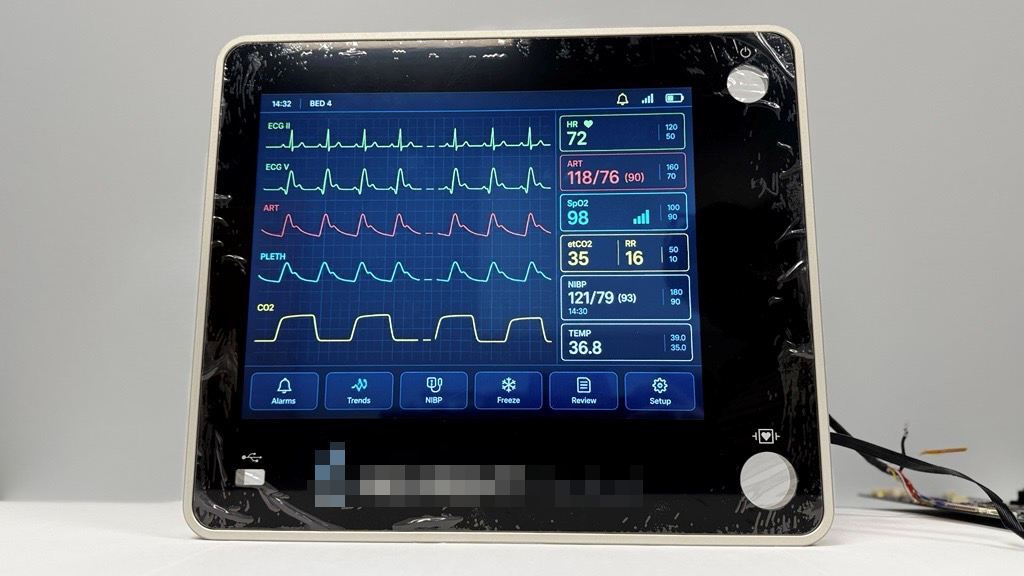
Diagnostic instruments, analyzers, and other medical equipment often contain substantial computing requirements but provide remarkably little space for the computer itself. A compact x86 platform with up to 48 GB of DDR5 memory, TPM 2.0, and NVMe storage creates some interesting possibilities for equipment requiring local processing, visualization, or data analysis. Our guide to choosing an edge AI computer for a medical device covers that decision in more depth.
Machine Vision and Inspection
IBASE positions the PI900 motherboard itself for machine-vision applications, and this is where the combination of Core Ultra processing and integrated AI becomes particularly relevant.
Not every machine-vision system needs eight cameras and hundreds of TOPS.
Take a production machine examining one camera stream for presence or absence, orientation, defects, OCR, or another relatively focused inference task. A compact system located directly at the equipment may serve it better. Where the job does call for a GPU, our post on choosing an edge AI computer for industrial vision and inference covers that range.
Retail Analytics
Local processing can allow cameras or sensors to generate useful information without necessarily pushing every raw data stream back to the cloud. IBASE specifically calls out retail analytics as an application for the ASB110-PI900.
Equipment Monitoring and IoT Gateways
Compact systems can also be useful as local intelligence nodes. A machine can collect information from connected devices, process data locally, identify events, and transmit only the information that actually matters.
That becomes particularly interesting when customers want to add intelligence to an existing piece of equipment without completely redesigning its main control architecture.
Don’t Overlook the Mechanical Details
One specification I frequently look at isn’t a processor specification at all.
How are we going to mount it?
The ASB110-PI900 supports desktop use, VESA mounting, and optional wall or DIN-rail mounting. It operates from a straightforward 12 V DC input and incorporates TPM 2.0 support.
Those aren’t glamorous specifications, but they matter when you’re trying to integrate a computer into an actual product. The ASB110-PI900 is specified for 0°C to 55°C operation with 0.9 m/s airflow, along with 1 Grms operating vibration and 20 G operating shock.
Something Program Managers Should Notice
From a program-management standpoint, reducing size can have benefits beyond simply saving enclosure space. A small standardized computer can potentially simplify the mechanical design, shorten integration time, and give an engineering team more flexibility about where the computing subsystem is located.
The ASB110-PI900 also uses a Pico-ITX motherboard measuring only 100 x 72 mm, which is a good illustration of how much functionality IBASE has packed into the platform.
For an OEM, I would look beyond the initial prototype and ask:
- Can this architecture simplify our mechanical design?
- Can we consolidate functions currently handled by multiple devices?
- Can the NPU handle the AI workload without adding a discrete accelerator?
- Do we have adequate airflow for the system’s 0°C to 55°C specification?
- How many USB, Ethernet, and display interfaces will the finished machine require?
- Will Wi-Fi or Bluetooth be required?
- What are the storage requirements?
- And most importantly, what problem are we trying to solve by adding AI?
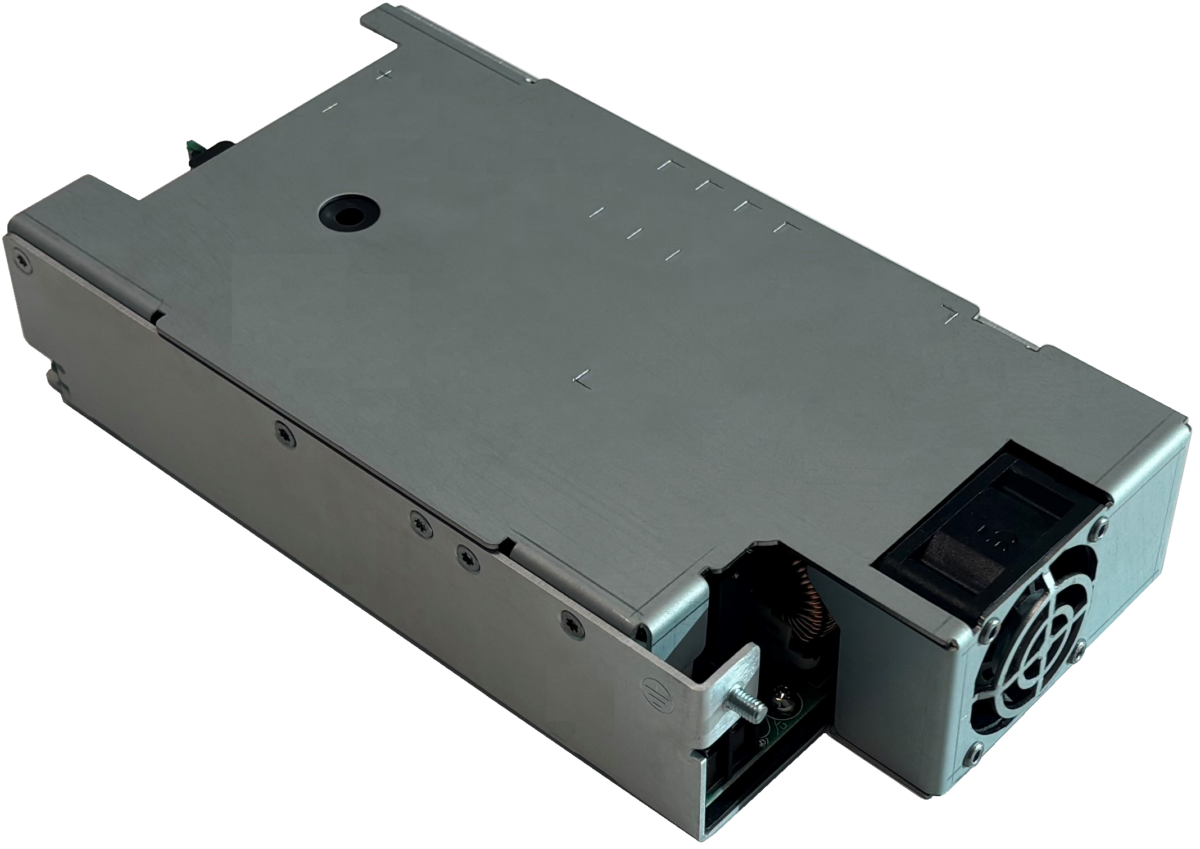
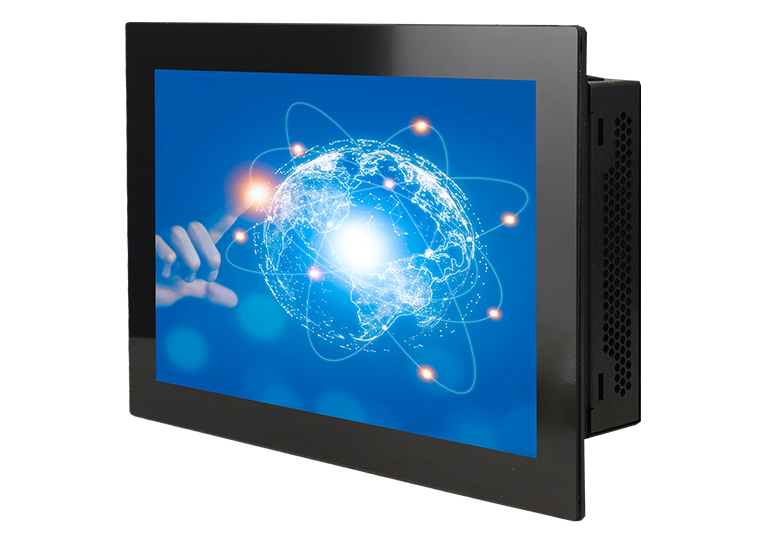
Those answers also decide the display and power supply that go with the computer. They share its enclosure and its thermal budget, so we choose them with it. Display, embedded, and power expertise sit under one roof at FORTEC US in Ronkonkoma, New York, so one engineering team is accountable for the whole assembly. The ASB110-PI900 takes 12 V DC only. Equipment with a different DC rail needs a DC/DC converter, and equipment fed from the mains needs an AC/DC power supply.
Where the ASB110-PI900 Fits, by Industry
| Industry | Likely application | Why it fits |
|---|---|---|
| Medical and lab OEMs | Analyzers, diagnostic equipment, and instruments | Small footprint, x86, TPM 2.0, and high memory capacity |
| Kiosk manufacturers | Ordering, ticketing, check-in, and payment | Compact size, dual display, USB, and 2.5GbE |
| Machine builders | Inspection and vision systems | Core Ultra CPU, GPU, and NPU processing |
| Retail equipment OEMs | Analytics and intelligent terminals | Edge inference in a compact package |
| Test and measurement | Portable and bench instruments | High compute density |
| Industrial automation | Local analytics and equipment monitoring | DIN-rail option, 2.5GbE, and M.2 |
| Security and access systems | Smart terminals and local recognition | Edge inference and TPM 2.0 |
| Specialty OEM equipment | Embedded controller or compute node | 140 x 95 x 60 mm envelope |
ASB110-PI900 FAQs
Does the ASB110-PI900 come with memory and an SSD?
No, IBASE ships it without memory or an SSD, and the power adapter is optional. Both ordering versions, ASB110-PI900M-155 and ASB110-PI900M-125, are configured that way, and we can supply it with the memory and storage the application needs.
What size power supply does the ASB110-PI900 need?
A 12 V DC supply sized from IBASE’s datasheet rather than the 15 W TDP. The datasheet lists the PI900 board at 5.93 A from 12 V with a Core Ultra 7 155U and 32 GB of DDR5. IBASE also offers an optional 120 W (12 V, 10 A) adapter for the system.
Does the PI900 board have LVDS and serial ports?
Yes, the board does, but the ASB110-PI900 case does not bring them out. The PI900 carries LVDS for an integrated panel, an RS-232/422/485 port, and digital I/O with four inputs and four outputs. A design that needs them can build the board in directly. LVDS suits equipment with the screen built in, such as an HMI display.
What certifications does the ASB110-PI900 have?
CE, LVD, and FCC Class B, according to IBASE’s datasheet. The optional 120 W adapter is listed as compatible with IEC 62368-1/EN 62368-1.
Is a Pico-ITX board smaller than a 3.5-inch SBC?
Yes, Pico-ITX is the 2.5-inch format. The PI900 measures 100 x 72 mm, and our single board computers range covers both formats.
Does your application need more computing or AI capability than its current embedded PC can provide, without room for a conventional industrial computer? Send us the enclosure’s inside dimensions, how heat leaves it, and the supply voltage. Add the cameras, sensors, and displays the computer connects to, and the model it has to run. We will tell you whether the ASB110-PI900 or the PI900 board on its own fits. Then we supply it with the display, touchscreen, SSD, and power supply as one project, backed by our technical services from first samples to series production.
Product photos: IBASE