
How Do You Choose an Edge AI Computer for Industrial Vision and Inference?
February 18, 2026
Choose an edge AI computer by the work it has to do on site: how much camera data arrives, how large the models are, and the space, power, and temperature range available on site. Those three answers separate a palm-sized box PC from a dual-GPU edge server. We source edge AI systems from several makers through the FORTEC Group supply network, and we integrate and support them from Ronkonkoma, New York, together with the display and power supply.
Real-Time Medical Imaging
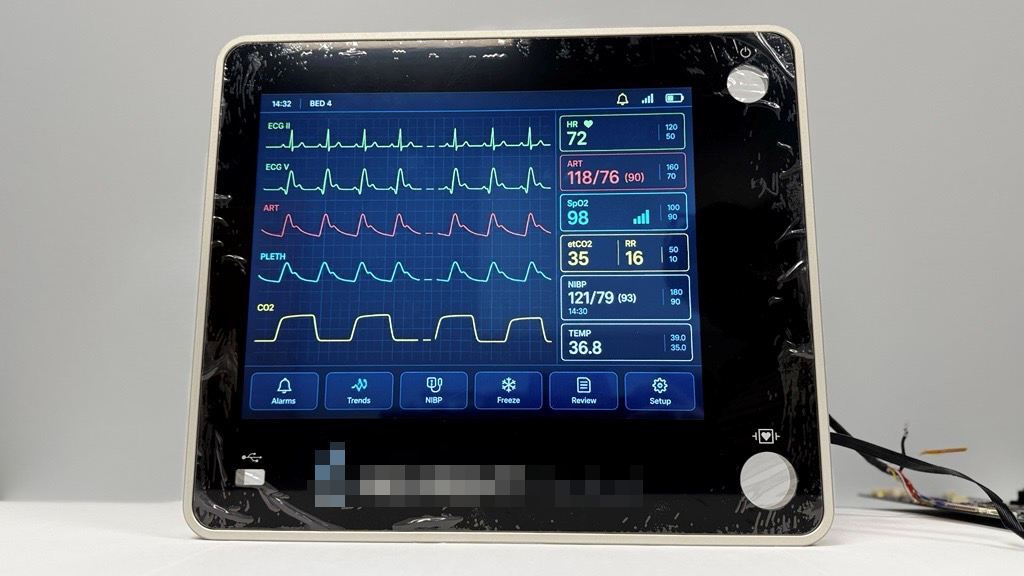
One built around camera bandwidth and low latency, such as the Advantech AIMB-294. This 170 x 170 mm Mini-ITX board carries NVIDIA Jetson Thor T5000 or T4000 processors, rated at up to 2,070 TFLOPS of FP4 inference. Up to four optical 25-gigabit interfaces and GMSL connections bring high-resolution camera data in, and NVIDIA’s Holoscan SDK keeps processing latency low. That combination is aimed at AI assistance in the operating room and at diagnostic systems that analyze images as they are captured, including intraoperative image analysis, with 4K display support for the result.
For expansion it offers M.2 for NVMe storage, B-key and E-key slots for 5G or Wi-Fi 7, USB 3.2, and 5-gigabit Ethernet, which suits mobile diagnostic systems and compact laboratory devices. TPM 2.0, ESD protection to level 4, and a -20 to +60°C operating range support continuous operation. Our post on choosing an edge AI computer for a medical device covers the design questions in more depth.
What fits compact inspection and robotics?
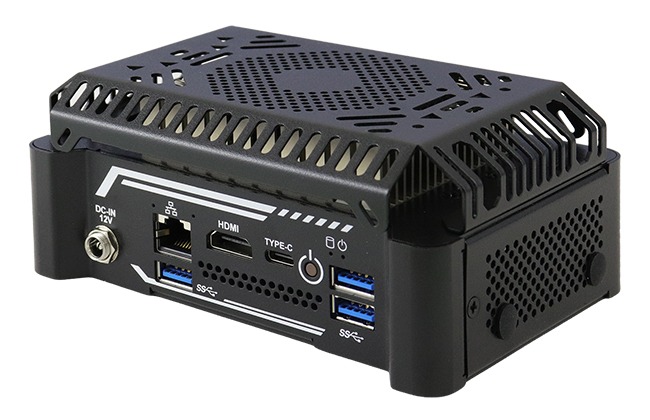
A small, fanless inference box. The Advantech AIR-150 pairs 13th Gen Intel Core mobile processors with an integrated Hailo-8 accelerator for up to 26 TOPS, in a 156 x 112 x 60 mm housing. It is built for autonomous robots, baggage inspection, defect detection, and security surveillance:
- -20 to +60°C operation, certified to IEC 61000-6-2 and IEC 61000-6-4 for electromagnetic compatibility.
- COM, USB, LAN, and an M.2 E-key slot for expansion.
- A software package that simplifies deployment: the maker’s edge AI SDK integrated with the accelerator’s runtime, a compiler that converts between AI model formats, and pre-trained models for object detection and classification.
Not every edge node runs inference. For data collection, HMIs, and point-of-sale terminals, the Nexcom Neu-X60 is a palm-sized, fanless box PC with an Intel N50 processor, 4 GB of RAM and a 64 GB M.2 SSD pre-installed, 2.5 GbE, HDMI, and a miniPCIe slot for wireless. It is a cost-effective, industrial-quality alternative to NUC-class PCs.
When does an edge design need GPUs?
When several neural networks have to run in parallel, or when the models are large language models rather than vision models. Two systems cover that range:
- The ASUS IoT PE8000G takes up to two GPU cards of up to 450 W each, with 12th to 14th Gen Intel Core processors and up to 64 GB of DDR5. It is built to MIL-STD-810H, runs from -20 to +60°C, withstands heavy vibration and shock, and has an 8 to 48 V DC input with ignition control and hot-swap SSD bays. Uses include medical technology, transportation, smart factories, and video surveillance and traffic systems.
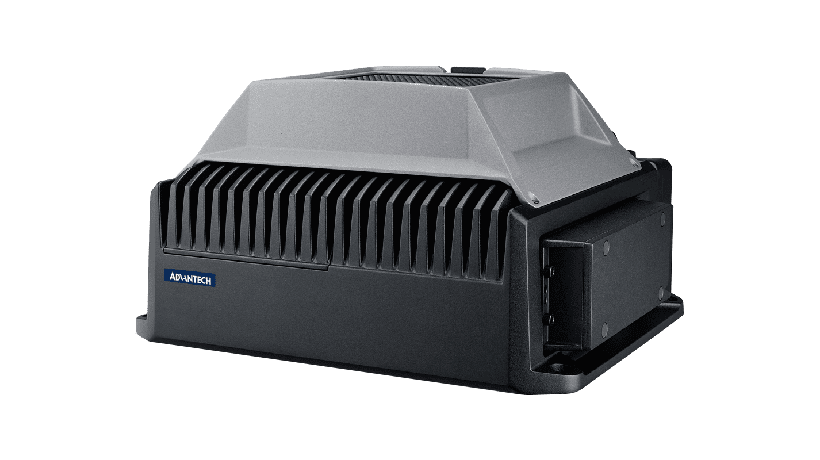
- The Advantech AIR-420 is a compact edge AI server for dual 3.9-slot GPUs, with AMD Ryzen 7000/9000 processors, up to 192 GB of DDR5, and up to 208 TFLOPS of FP32 performance. Intelligent fan control and a redundant power supply support continuous heavy workloads, and a no-code tool simplifies training and optimizing models. It received a Best Choice Award at COMPUTEX 2025 and targets LLMs, medical imaging, smart factories, and digital cities.
How do we help select and integrate one?
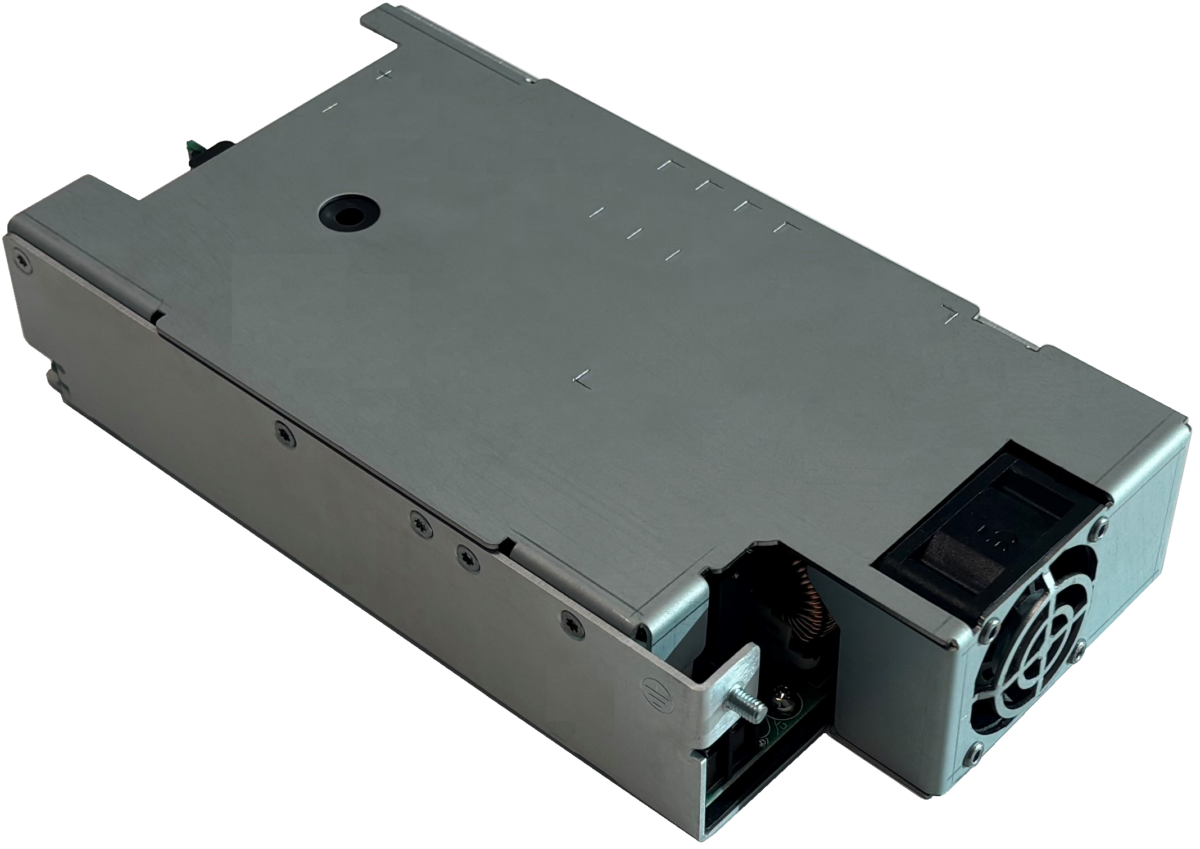
Tell us what the system has to see, decide, and survive, and we will take it from there. We recommend the computer, match it to the display assembly and power supply, handle the integration and sourcing, and stay with the project from first samples to series production, backed by our technical services. These systems are examples rather than limits: we design edge computing into whatever device the product requires.