What Does the FORTEC US Engineering Team Do?
November 19, 2026
By Talisa Westford, Marketing Executive, FORTEC US
The FORTEC US engineering team turns each development, non-recurring engineering (NRE), or tooling order into a design we can build. They check the order, draw the assembly, get it approved, and take it from prototype to production release. They also build the jigs, firmware, and software the rest of our facility in Ronkonkoma, New York, works with.
Who Is on the FORTEC US Engineering Team?
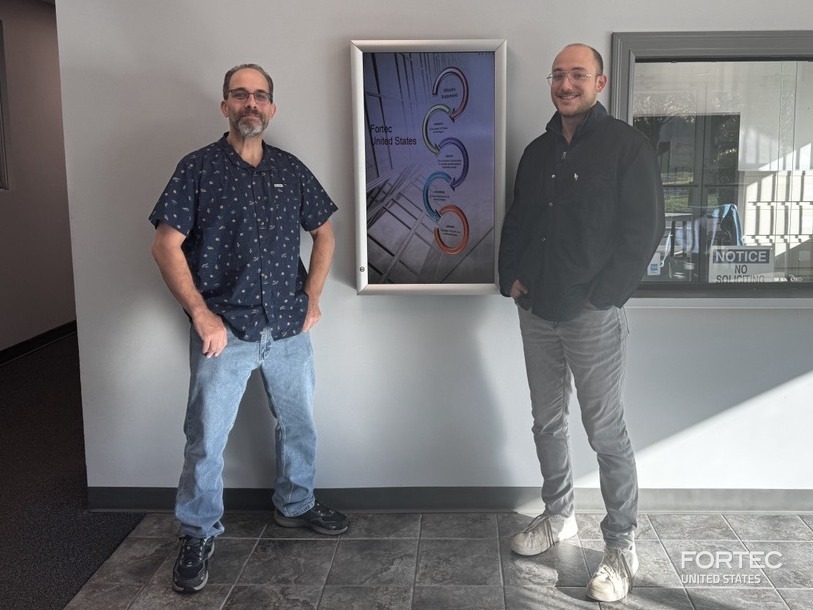
Kyle Rickey, our Engineering and Production Supervisor, leads our engineering team, with Mark Mujica, our touch specialist. Kyle covers the mechanical side and Mark the computer and firmware side. Problems usually don’t wait for a meeting: one of them walks over and asks the other to take a look. The team:
- Kyle Rickey, Engineering and Production Supervisor: joined FORTEC straight out of college about five years ago. He runs engineering, takes the larger share of the 3D models and drawings, including the more complex assemblies, and designs the fixtures and jigs for our bonding press.
- Mark Mujica, Engineer: more than 20 years at FORTEC, first as a technician, then as an engineer. His strengths are touch, Windows builds, and controller programming, and he wrote most of the software used on our production floor.
Mark’s 20-plus years here have built a network outside the company too:
“I’ve been here so long that I know people outside our company now that are vendors and resources for us that used to be my coworkers here (when we were Apollo Display Technologies).”
Mark Mujica, Engineer, FORTEC US
What Does Engineering Check When an Order Comes In?
When an order comes in, our engineering team checks that everything sold will work together before anything is bought. Sales hands engineering a red folder, our name for the order package: the sales input form, the design, and the purchase order.
Kyle’s first question is whether the right thing was sold. A controller that can’t run a 4K panel at its full resolution gets caught here. So did a controller kit Mark once received that was specified for a different panel from the one on the order.
Once the order checks out, engineering builds the bill of materials (BOM) and creates the top-level part number. Both go back to sales, so the order can be placed. Every order is engineered this way before its parts are bought, which is what makes us more than a distributor.
How Does a Design Get Drawn and Approved?
Our engineers draw each design in a blue folder, our name for the engineering documents: the 3D model and the drawing. By the time an order reaches engineering, the panel and the parts are usually chosen, so the work is how they go together. Kyle works from the panel’s full datasheet rather than a short rundown.
Kyle and Mark both build the 3D models and drawings, and each one is signed off internally. Sales then sends the drawing to the customer for approval. Engineering also puts together a test kit, so it is ready when the prototypes are built. Once the customer approves it, we wait for the material to arrive, and the order moves on to purchasing and production.
What Happens Between Prototype and Production?
Our prototypes take 6 to 8 weeks or less, and the part number shows which stage a design is at. A prototype part number ends in a number, such as _1 or _2. A production part carries a letter revision, starting with A.
The customer tests the prototype and sends feedback on a form: approved as it is, or what to change. From there, the customer either goes to production with minor changes or runs another prototype. Occasionally we build another version because a part has become unavailable, such as a panel or a chip its manufacturer has stopped making. How FORTEC US Helps Companies Navigate End-of-Life Components explains how we plan for that.
The production version gets its own release drawing for the customer to approve, so production isn’t tied to a prototype revision. The production release closes through an engineering change notice (ECN) that everyone signs off. Kyle tracks every open project on an ECN tracker until it does.
What Does Engineering Need to Know About Your Application?
Our engineering team needs to know where and how the display will be used, not only what it is. The earlier we see it, the more of the design we can build around it instead of working around it later. Kyle and Mark ask about:
- Temperature: the operating range, and any extreme highs or lows.
- Sunlight and outdoor use: direct sun can call for UV protection, and an outdoor display should stay readable through polarized sunglasses. See how we make a display readable in direct sunlight.
- Touch usage: how operators use the touchscreen, and whether they wear gloves or the screen gets wet.
- Ingress protection (IP) rating: even when the sealing happens in the customer’s product, the rating can change what we do at the edge of the glass.
- Electromagnetic interference (EMI) target: the classification the product has to meet can decide which chip goes in, such as a medical-grade alternative with better EMI performance.
- Mounting: whether anything will twist or bend the display. Bonding needs things flat, so for a tight assembly the customer’s 3D model shows us where that could happen.
- Touch tail direction: which way the touchscreen’s flex tail should run, which our project worksheet asks for.
- Impact (IK) rating: the IK rating the product has to meet.
- Operating system: the operating system the product will run.
For how each condition shapes the assembly, see How Do You Design a Display for Harsh Environments?
How Does Engineering Tune a Touchscreen?
We tune the touch controller or integrated chipset to the conditions it is intended to work in. How a touchscreen behaves in its real conditions can’t be judged from a requirements sheet alone. We build a sample, the customer tests it and sends the data back, and we work through it with the customer and the panel maker. Tight touch requirements are where much of a project’s back and forth goes.
How Should a Bonded Display Be Mounted?
We recommend letting us mount a bonded display into its bezel or enclosure. It avoids damage and improper mounting, and the finished unit is better protected in shipping and handling. Customers can mount it themselves, and these are the rules to follow. Kyle puts it this way:
“99% of the time, if the bond is good here, it will be good with the customer, as long as they don’t break the design rules for mounting.”
Kyle Rickey, Engineering and Production Supervisor, FORTEC US
Don’t mount with tape and screws at once. Together they double the torque tension, and as temperatures rise and fall, the two mounts twist the display out of flat until the bond starts to separate. Kyle’s rule is to keep tension off the bond entirely. Pressing on it a little is fine, but “any tension over time is going to be a problem because it’s adhesive, it’s going to pull apart,” he says.
Give the touch tail room. Never crease it, and never bend it right at the edge of the glass. Its traces are laminated to the glass with a conductive adhesive, so too much pull peels them away and the contact breaks. The curve the tail needs is in Which PCAP Touchscreen Construction Fits Your Design?
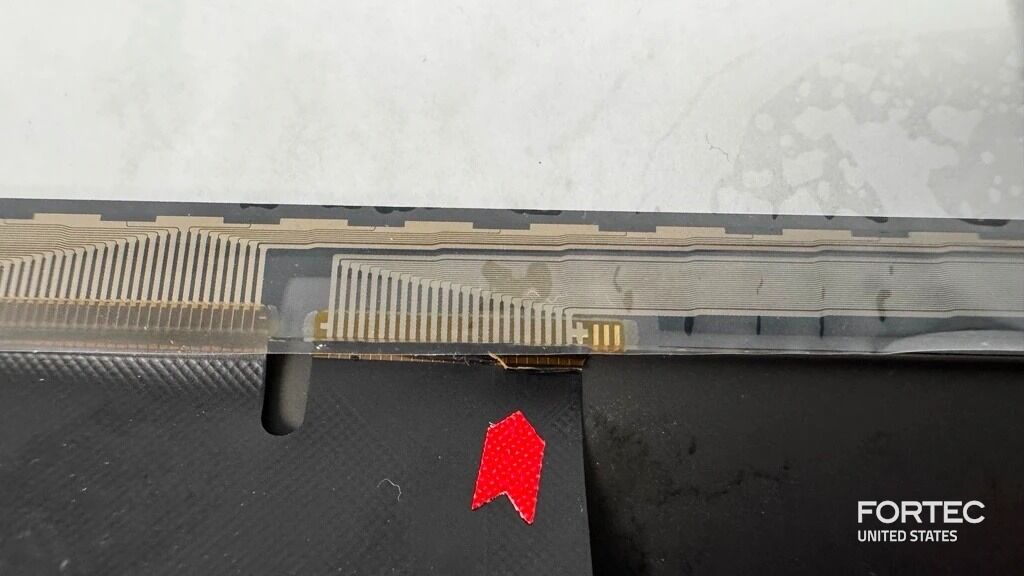
An IK10 impact rating belongs to the mounted assembly, not the glass alone. Kyle explains that glass lying flat can pass the test, but once it is mounted with a slight flex it is already preloaded, and the same glass may not.
What Else Does Engineering Build?
Our engineers also build complete kits that drive the panel, with the firmware and software they run on. Mark explains why customers want them:
“We’re able to drive panels, which is attractive because then they don’t have to worry about finding their own driving solution and they can drive whatever input they want.”
Mark Mujica, Engineer, FORTEC US
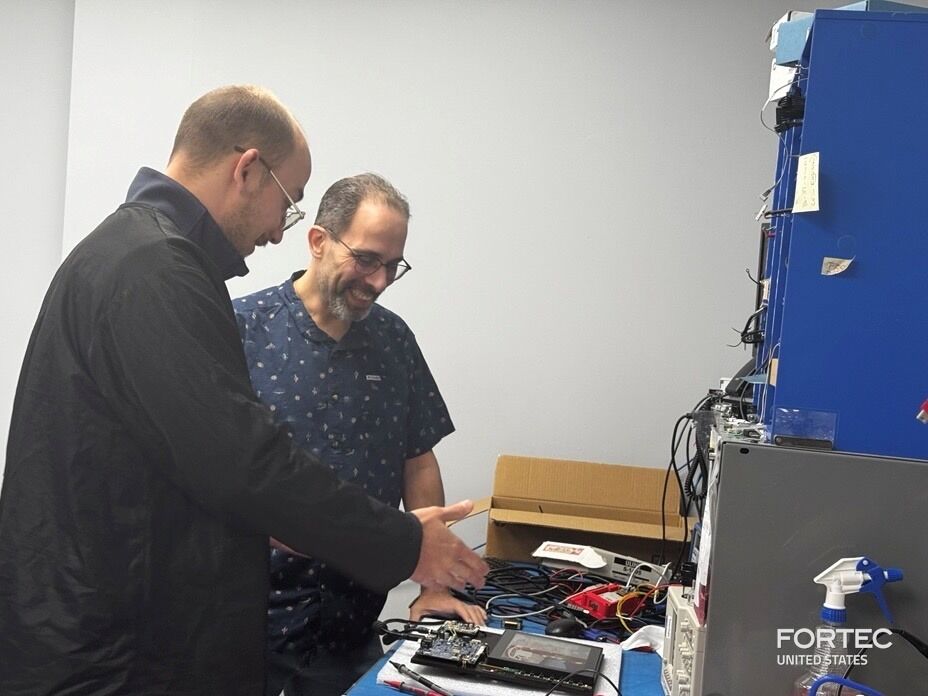
Mark programs our Prisma TFT controllers, does Windows builds, and handles touch firmware. On our production floor, his software lets production program and test boards at the click of a button. Kyle designs the jigs that hold each assembly in the bonding press: 3D-printed jigs for prototypes, and CNC-machined, spring-loaded jigs for production. The production jigs give more precise alignment and an improved process flow.
How Does Engineering Hand Off to the Rest of FORTEC US?
Engineering hands each approved design on to operations and production, and stays involved after that. Kyle runs a weekly status meeting that lays out each open project and who has room for the next one. It also shows what is waiting on a drawing approval or on information from a customer.
Kyle also manages production, and engineering works with quality control (QC) on any part that fails a check. When a return involves debonding, engineering investigates how the display was mounted and whether it saw extreme temperatures. Meanwhile, the FORTEC US operations team buys the parts and keeps the order on schedule until it ships. For every step together, see how an order moves through FORTEC US.
FORTEC US Engineering Team FAQs
How quickly can FORTEC US build a custom display prototype?
A prototype takes 6 to 8 weeks or less. After the customer’s feedback, the design goes to production with minor changes or into another prototype run.
Can FORTEC US mount the display into our enclosure?
Yes, and we recommend it. Mounting the bonded display here avoids mounting damage, and the unit ships better protected.
What is an ECN?
An engineering change notice (ECN) is the document that releases a design or a change to it. At FORTEC US, a design is ready for production only once everyone involved has signed off its ECN and it is closed.
Does FORTEC US program the display controller?
Yes, we program the controller boards in the display kits we supply. That includes our Prisma TFT controllers and the touch controller, which we tune here in Ronkonkoma.
What does IK10 mean for a bonded display?
IK10 is the top impact grade in IEC 62262: 20 joules, equal to a 5 kg mass dropped from 400 mm. For a bonded display, it is a rating of the assembly as mounted, since the cover glass, the stack-up, and the mounting all decide whether it passes.
Tell Us Where It Has to Work
Tell us where the display has to work and how it will be mounted, and we will take it from there. Send the application, the environment, and a 3D model of the assembly if you have one. Our engineers check it, draw it, and take it from prototype to production release, and our team in Ronkonkoma builds and ships it. Email info@fortec.us or contact FORTEC US to start.
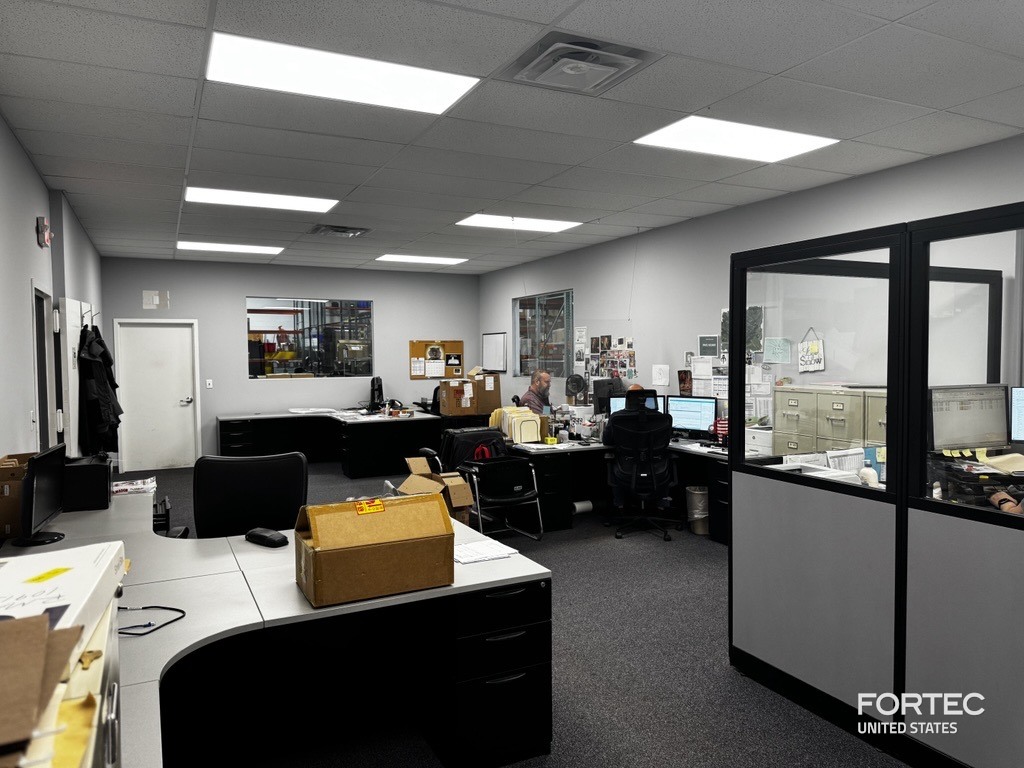
What Does the FORTEC US Operations Team Do?
November 17, 2026
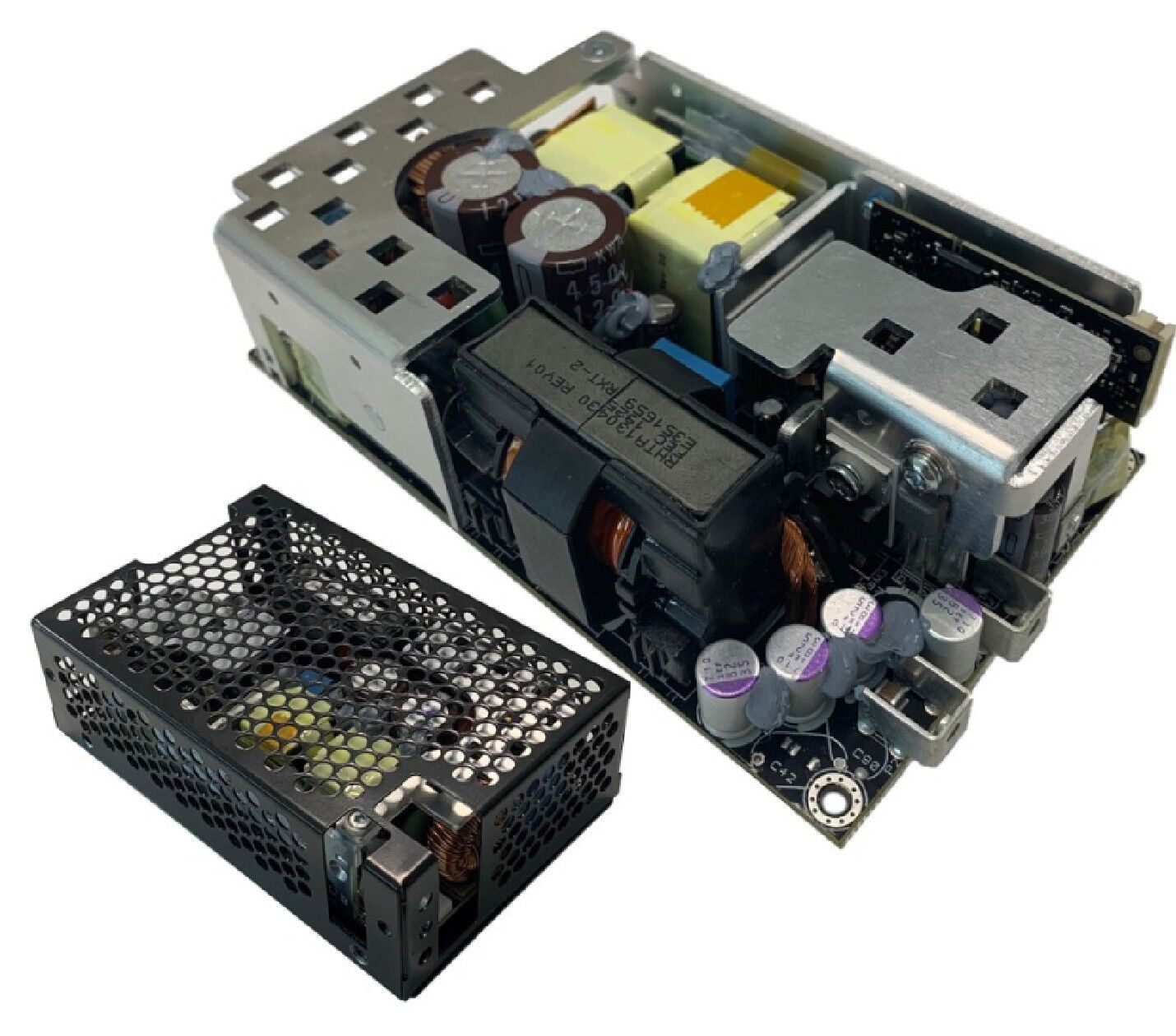
DDP520 Power Supply: 340 W Without a Fan in a 3 x 5-Inch Footprint
November 16, 2026
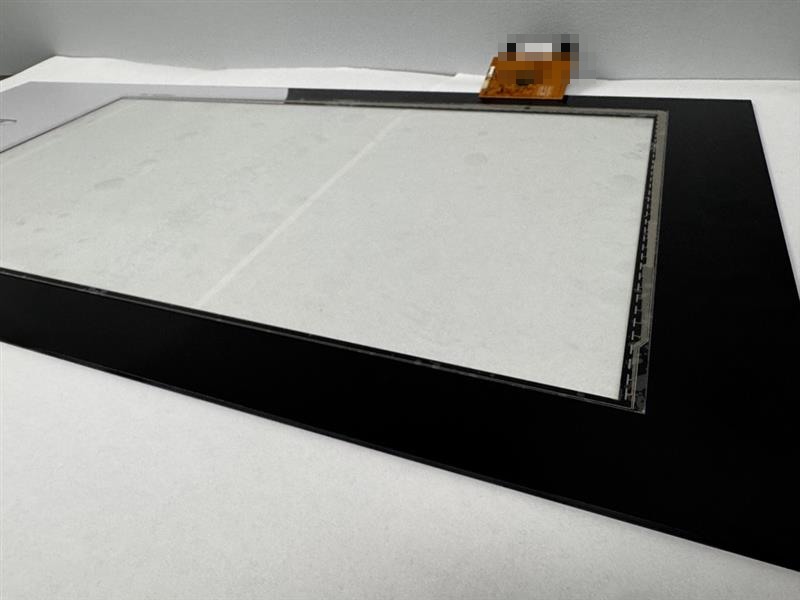
Which PCAP Touchscreen Construction Fits Your Design: Glass/Glass, Glass/Film, or Film/Film?
November 4, 2026
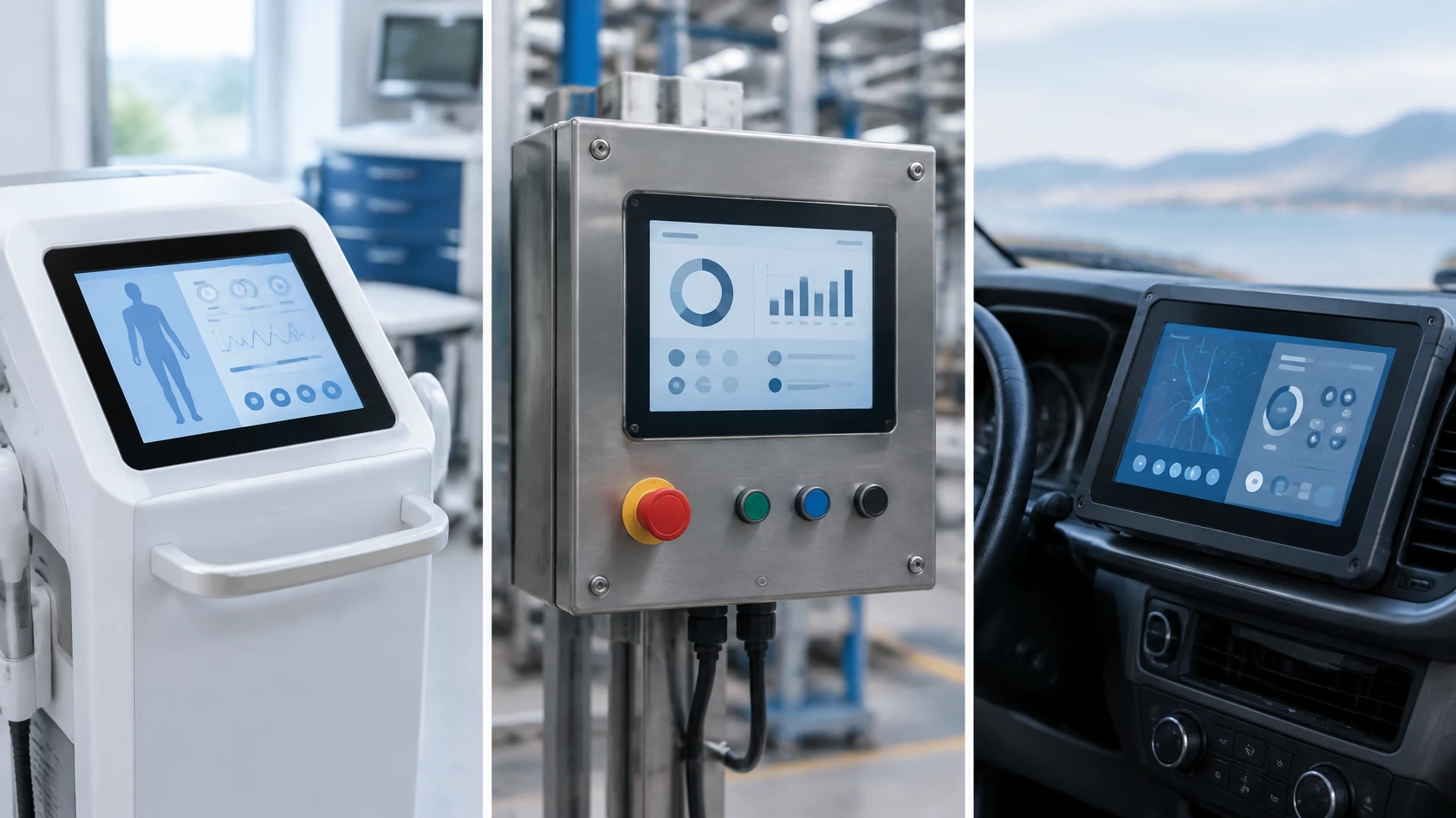
Which Industries Does FORTEC US Serve?
November 3, 2026
Bringing AI to the Point of Care: Does Your Next Medical Device Need an NPU?
November 2, 2026
What Does the FORTEC Group Mean for US Customers?
October 30, 2026