Which PCAP Touchscreen Construction Fits Your Design: Glass/Glass, Glass/Film, or Film/Film?
November 4, 2026
By Scott Makboulian, Managing Director, FORTEC US
There are three main types of PCAP touchscreen, named for the layers they are built from: glass/glass (G/G), glass/film (G/F), and film/film (F/F). Which one fits a design depends on how much the front of the device has to withstand, how large the display is, and whether the cover glass is a standard part or one designed for the product. We build PCAP touchscreens into the display assemblies we design and manufacture in Ronkonkoma, New York, and bond them to the panel with VacuBond® optical bonding.
Probably 70% of everything we do has a touchscreen on it.
Scott Makboulian, Managing Director, FORTEC US
What Is a PCAP Touchscreen?
A projected capacitive (PCAP) touchscreen uses two grids of transparent electrodes, one for each axis, to project an electric field through the cover glass. A finger disturbs that field, and the touch controller works out where. The electrodes are usually indium tin oxide (ITO), and other conductors such as metal mesh are also used, especially on larger sizes. PCAP is by far the most common touch technology. It supports multi-touch and gestures, and depending on how the controller is tuned, it can work with gloves and ignore water drops and palms resting on the glass.
What Do G/G, G/F, and F/F Mean?
The letters name the layers from the front down, G for glass and F for film. In G/G and G/F the first letter is the cover glass and the second the sensor. F/F names the two film layers of the sensor, which still goes under a cover glass, so the finished F/F stack is glass/film/film (GFF). A film sensor is arguably our most used PCAP construction, according to Kyle Rickey, our head of engineering and production.
G/G vs G/F vs F/F at a Glance
| Glass/glass (G/G) | Glass/film (G/F) | Film/film (F/F) | |
|---|---|---|---|
| Sensor | Patterned on its own sheet of glass behind the cover glass | One film sensor laminated to the back of the cover glass | Two ITO films laminated together under the cover glass |
| Thickness and weight | Thickest and heaviest of the three | Thinner, with one fewer glass layer | Thinner and lighter than a glass sensor |
| Robustness | Naturally robust, stable over temperature | Comes mainly from the cover glass | Comes mainly from the cover glass |
| Best fit | Impact, public use, large formats | Custom shapes, prints, and coatings; large formats | Slim, light devices |
| Example | TG-DD1850-A02, 18.5 in | TF-DD4300-A00, 43 in | TP-DD1040-A07, 10.4 in |
Glass/Glass (G/G)
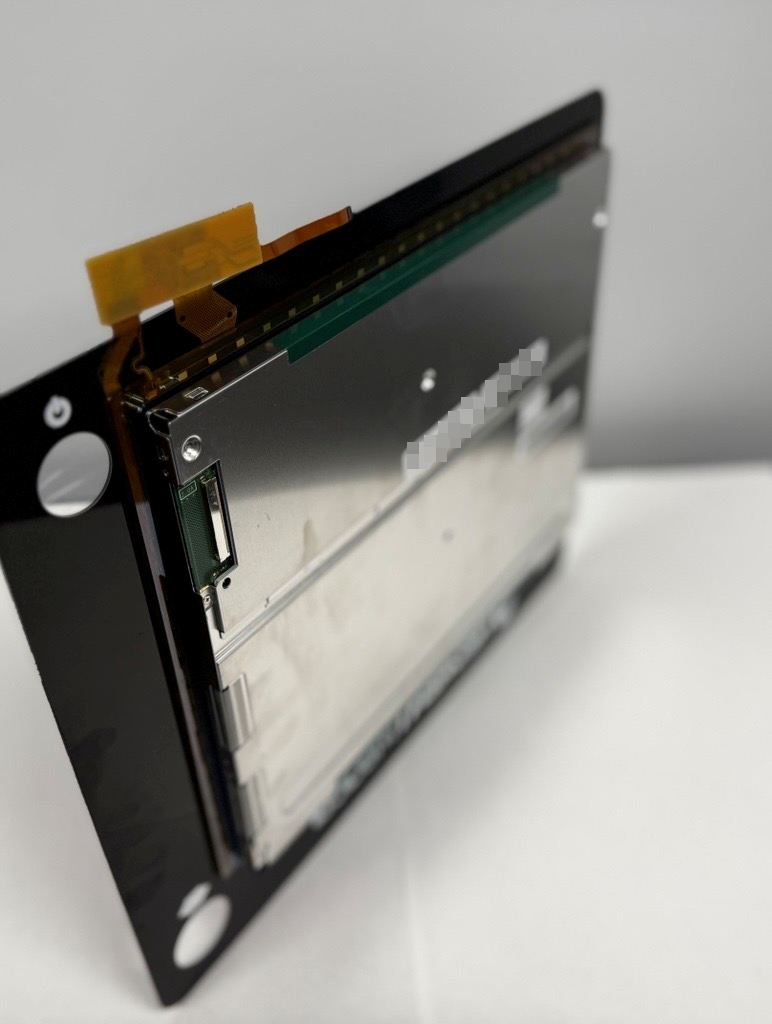
A glass/glass touchscreen, also written GG or G+G, puts the cover glass over a sensor patterned on its own sheet of glass. Glass on both layers gives a naturally robust structure that stays stable over temperature, and the second sheet makes it thicker and heavier than a film sensor. Our TG-DD1850-A02, an 18.5-inch PCAP touch-glass sensor 0.55 mm thick, is one of many we combine with a cover glass in the customer’s own design. It comes from the touch competence center of FORTEC Integrated, our sister company in Germering, Germany, home of the Group’s own PCAP touchscreens and touch films.
Glass/Film (G/F)
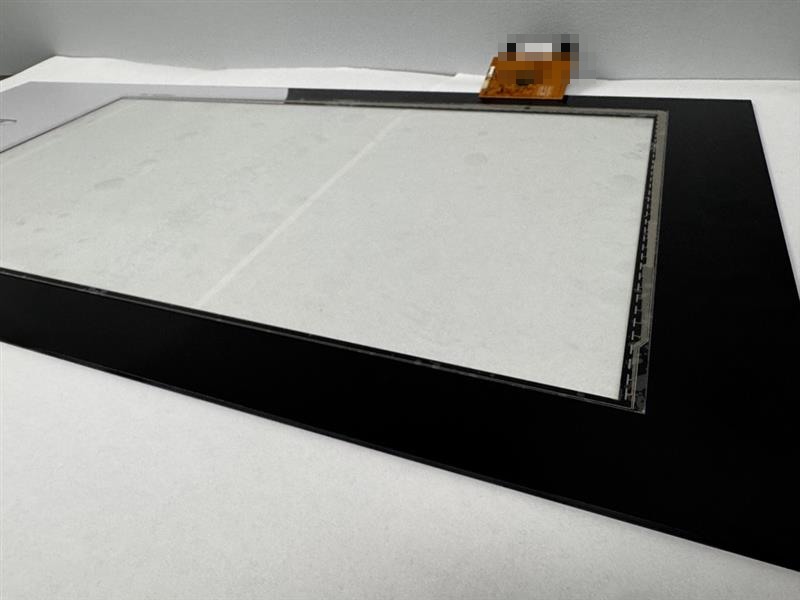
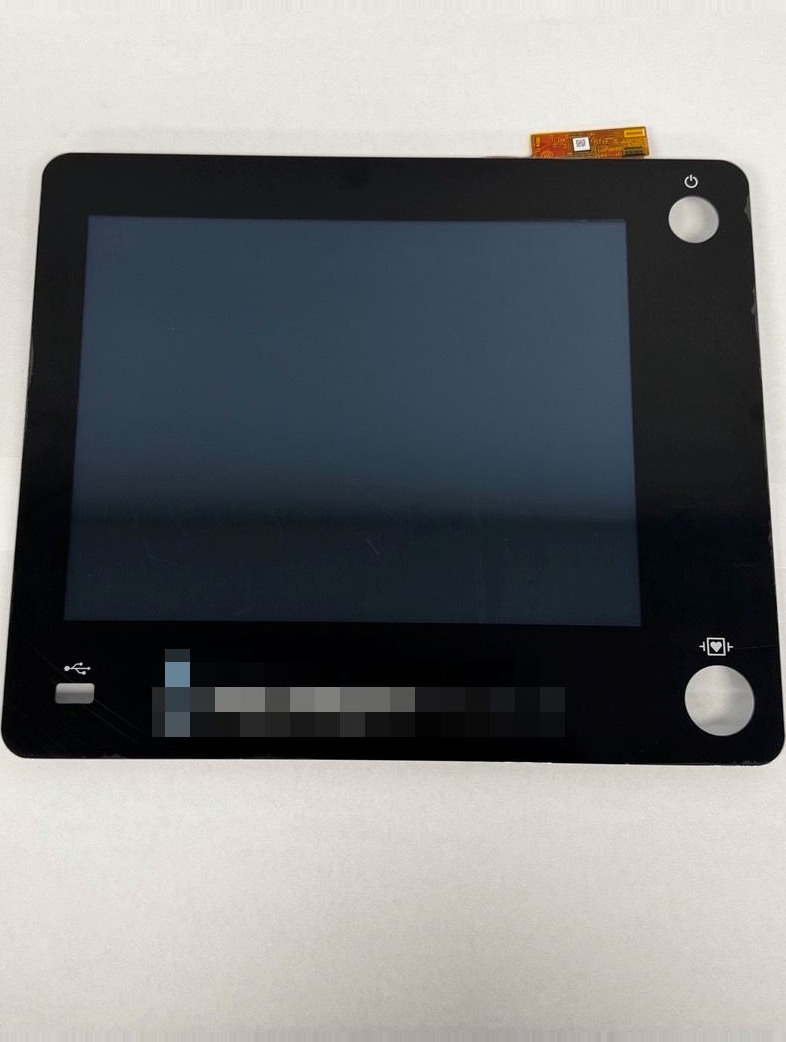
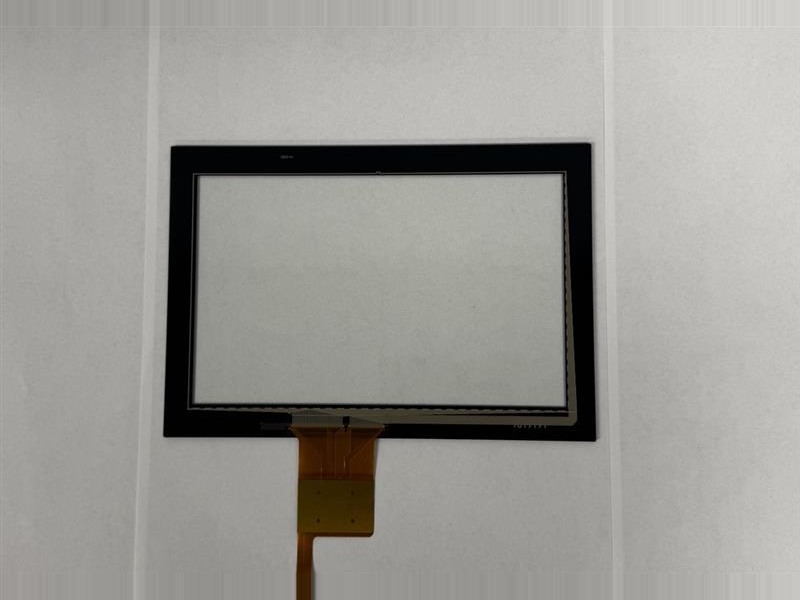
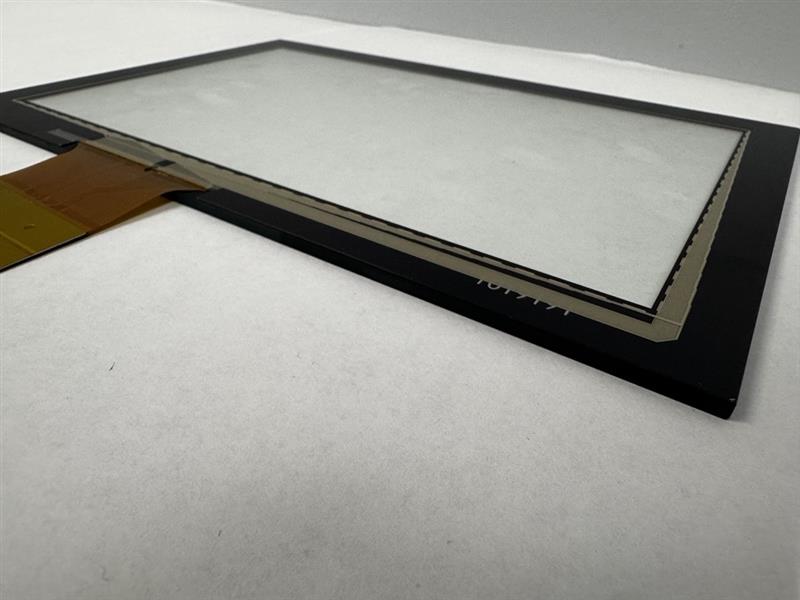
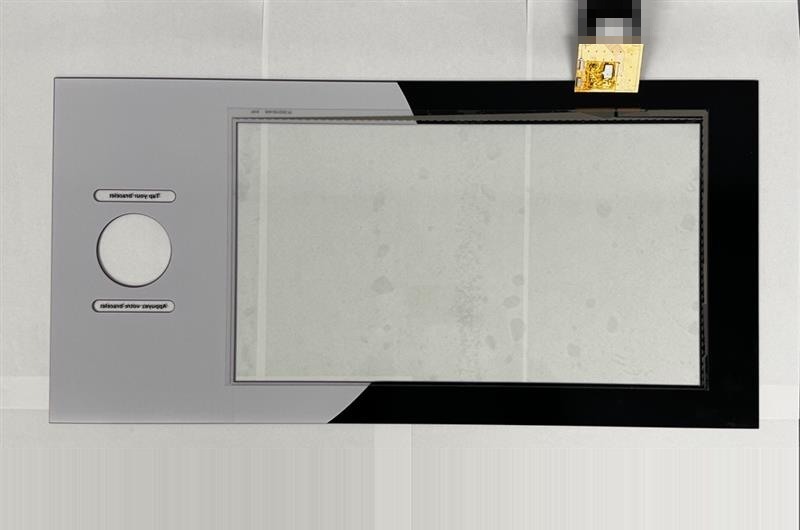
A glass/film touchscreen, also written GF or G+F, laminates a thin film sensor, also called a touch foil, to the back of the cover glass. Using a film in place of a second glass sheet removes a glass layer between the panel and the cover glass, which saves space and gives better optical results. It is also how we build touch into a cover glass designed for the product: our Infinite Touch Design touch films are laminated to a customized cover glass, and the number of touch points depends on that glass’s thickness. The range runs from 4.3 to 65 inches, and some sizes take a cover glass up to 10 mm thick. One example is the TF-DD4300-A00, a 43-inch PCAP touch film with a 0.43 mm film sensor.
Film/Film (F/F)
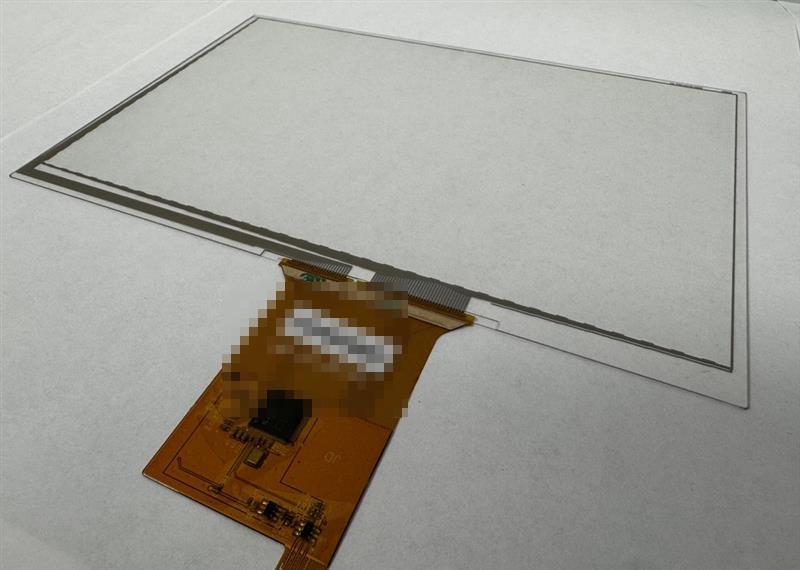
A film/film touchscreen builds the sensor from two ITO films laminated together, one for each axis of the electrode grid, under the cover glass. The cover glass is always part of the finished touchscreen, so the full stack is glass/film/film, also written GFF or G+F+F. Two films make a much thinner and lighter sensor than a glass one. Our TP-DD1040-A07, a 10.4-inch PCAP touchscreen, is built this way, with a 1.8 mm strengthened cover glass over two ITO films joined by optically clear adhesive. It works with gloves and recognizes palms.
What Other PCAP Constructions Are There?
A few constructions save thickness by merging the sensor into another layer:
- GF2: a single film with electrodes on both sides under the cover glass, so one film does the work of two.
- One glass solution (OGS): the sensor is patterned directly on the back of the cover glass, with no separate sensor layer.
- On-cell: the sensor is applied to the display glass while the panel is made, so no separate touch layer is needed and internal reflections are reduced.
- In-cell: the sensor is built into the panel’s cell itself, for a slimmer, lighter display with fewer internal reflections.
On-cell and in-cell touch come with the panel, so the touch and the panel are chosen together. The sensor also sits closer to the panel’s own electronics, which makes it more sensitive to display noise. That is one reason a separate touchscreen remains the usual choice for larger and more demanding designs. The other is control over the design. “With on-cell and in-cell, we’re stuck to the parameters of the panel supplier,” Kyle says, “so we typically don’t recommend them. They are far less customizable options.”
Which PCAP Construction Fits Which Design?
It depends on where the device has to work: G/G for impact and public use, G/F for a custom cover glass, and F/F for slim, light devices.
By Requirement
- Impact, vandalism, or public use: the cover glass does most of the work. A thicker or toughened cover glass makes any construction more robust, and G/G adds a glass sensor behind it. Mounting counts as much as the glass. “A piece of glass is not IK10 on its own,” says Kyle. “How it is mounted weighs heavily on it.”
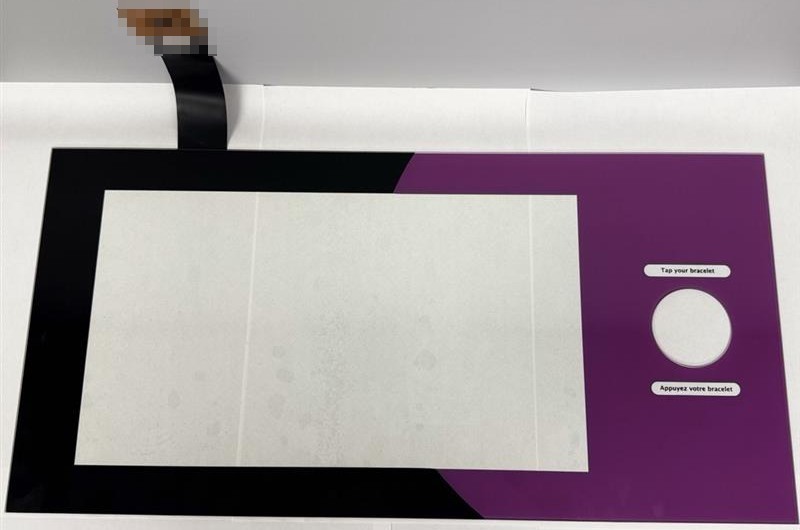
- Custom shapes, prints, and coatings: G/F, with the touch film laminated to a cover glass designed for the product. That glass can carry a special shape, colored or logo prints, anti-glare, anti-reflective, or privacy coatings, and shatterproof glass for public areas.
- Large formats: G/G as well as G/F, since some of our 55-inch and 65-inch PCAP touchscreens are glass/glass.
- Slim and light devices: G/F or F/F, which replace a glass sensor with film. On-cell or in-cell is slimmer still, with the noise trade-off above and far fewer options to customize.
- Gloves, water, and frequent cleaning: these depend mostly on how the touch controller is tuned, not on the construction, so they are specified with the cover glass thickness.
By Market
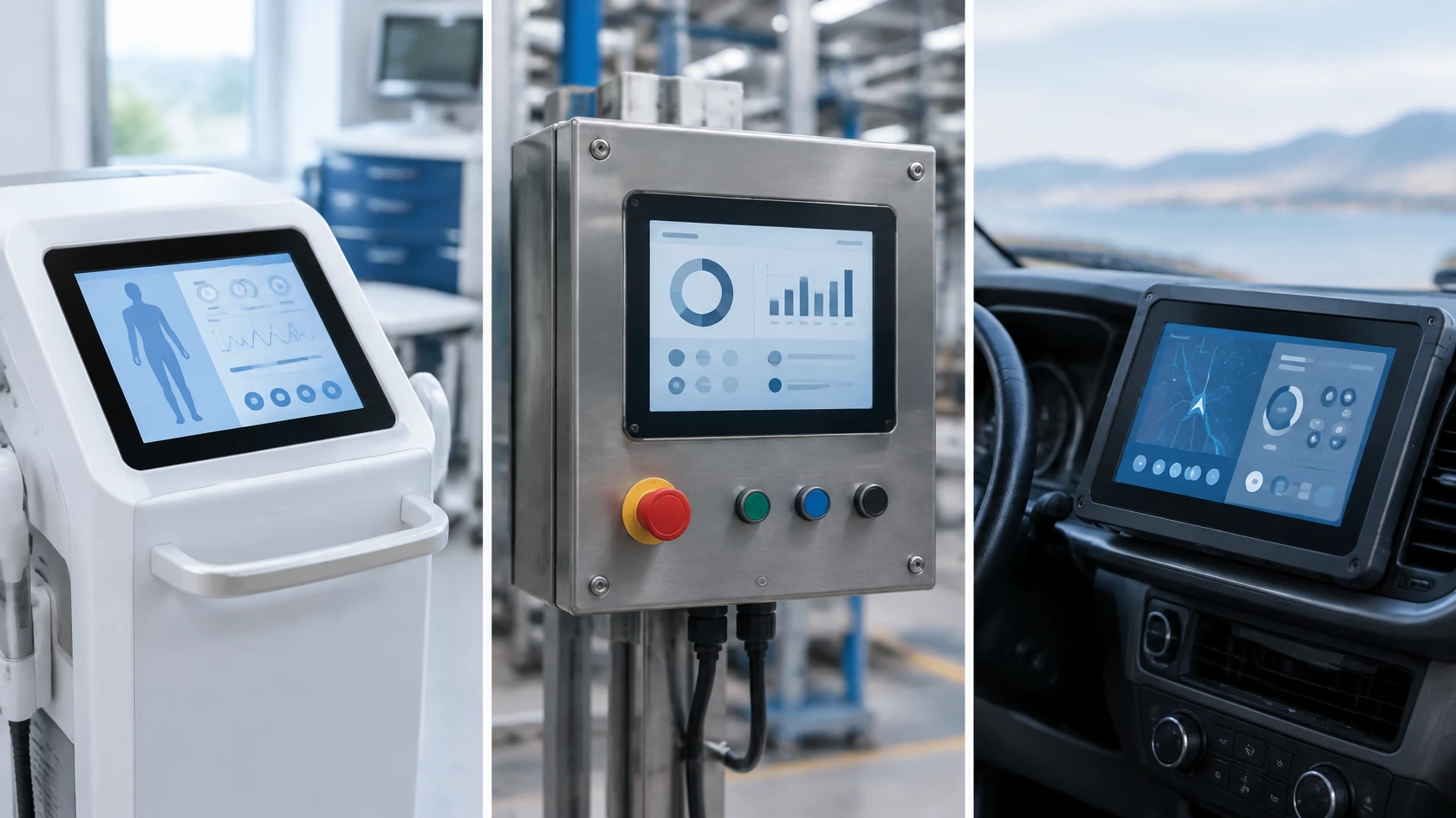
- Touchscreen for a medical device: cleaning and gloved use drive the choice. A device that is cleaned down with disinfectant calls for a chemically resistant cover glass, with antibacterial touch films and IP65-rated options available. On our medical displays, PCAP touch is configured to work through gloves, down to two layers of surgical latex, and to detect water, saltwater, and blood.
- Industrial touchscreen: gloved operation, wide operating temperatures, and IP-rated bezels drive the choice. For industrial displays and HMIs, the PCAP controller can be programmed for gloves from ESD textile to chemical-resistant.
- Rugged touchscreen for defense: shock, vibration, and EMI drive the choice. The front follows the impact guidance above, and an EMI filter bonds into the same stack with VacuBond. Our ruggedized defense displays also come with NVIS-capable options.
- Touchscreen for transportation equipment: ticketing and validation terminals are unattended, public, and often outdoors, so vandal resistance and sunlight readability drive the choice. That means the impact guidance above, anti-glare or anti-reflective finishes, and VacuBond optical bonding for outdoor-readable transportation displays.
- Touchscreen for a lighting console or show control desk: the panel layout drives the choice. It sets non-standard sizes, custom cover glass, and a front surface that has to survive a working stage. That points to G/F, with the touch film laminated to a cover glass shaped and printed for the console. Our audio and lighting displays are built around the console’s enclosure.
These sectors are examples, not limits. We design into whatever context the product requires.
How Is a PCAP Touchscreen Bonded to the Display?
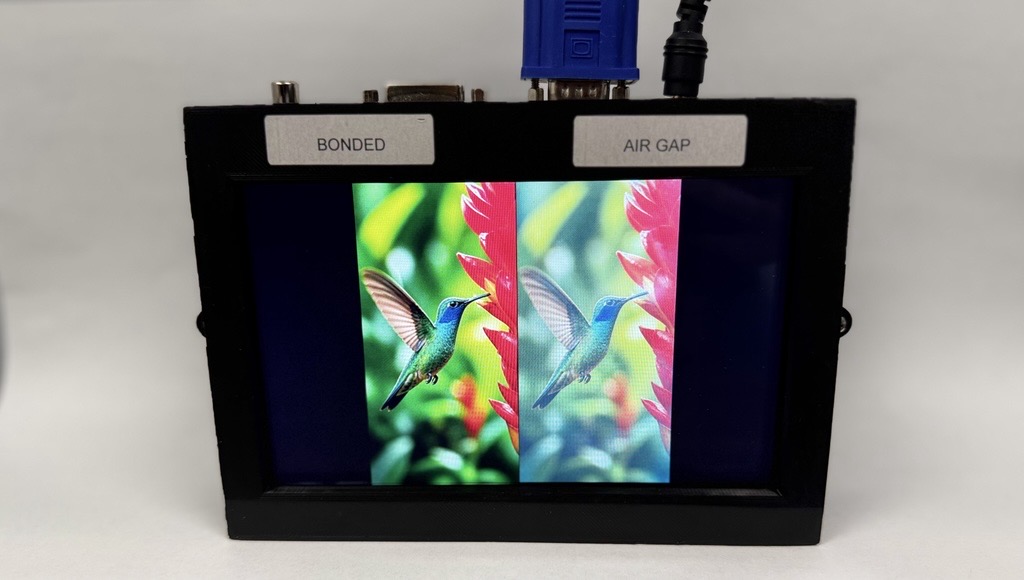
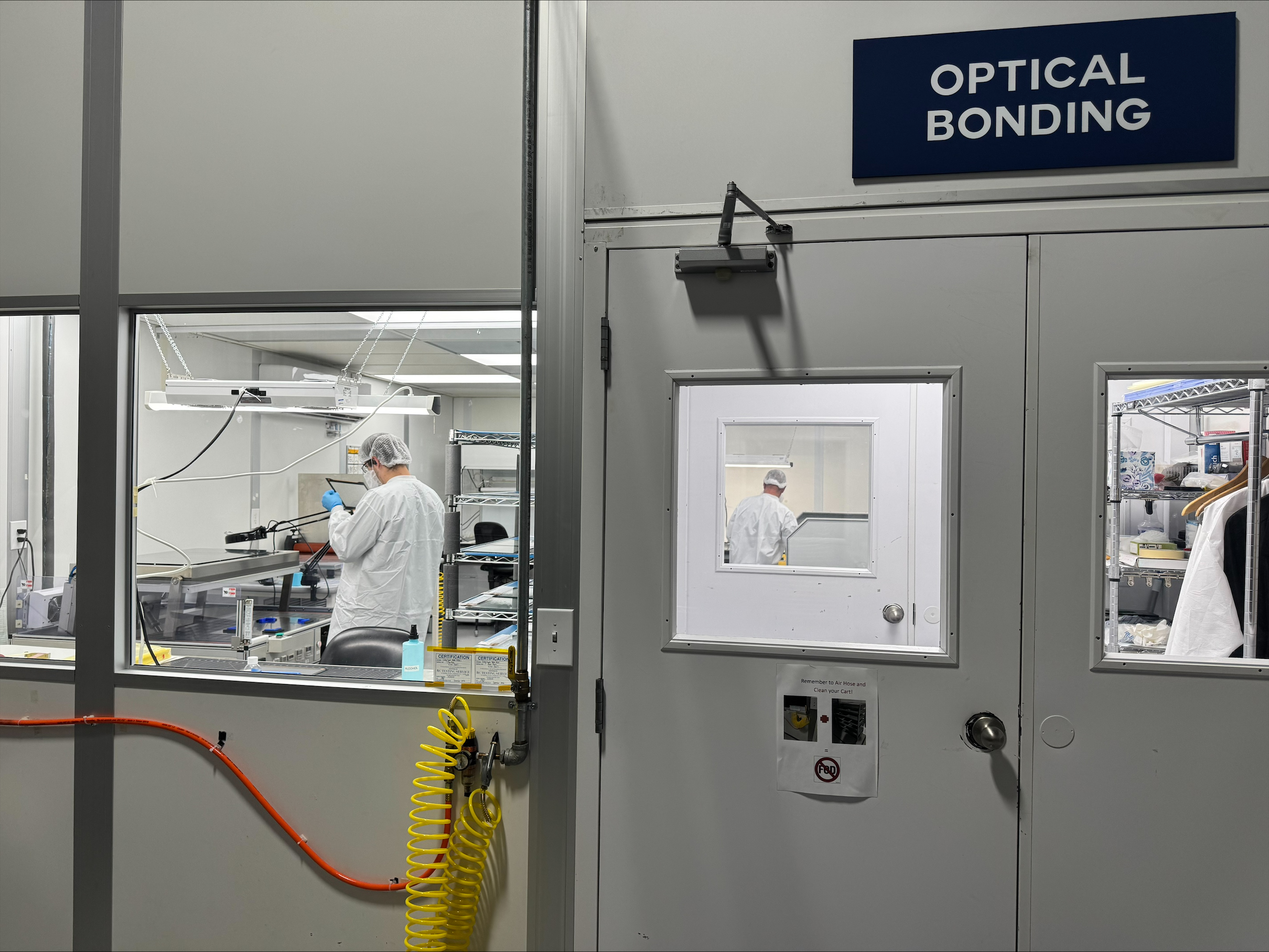
With optical bonding, which fills the air gap between the touchscreen and the panel. VacuBond optical bonding works with PCAP touchscreens in glass/glass, glass/film, and film/film constructions, as well as resistive and AMR touchscreens. It laminates a ready-formed silicone OCA under vacuum, with no dam to hold liquid adhesive, so it can also bond a cover glass onto a display whose touch is built in and which has no bezel. The touch controller is tuned for the whole stack, so a new or thicker cover glass means retuning it. We do that controller firmware tuning here in Ronkonkoma, so touch works through the finished cover glass. For the bonding material itself, see how silicone OCA, acrylic OCA, and LOCA compare.
Why Choose the Touch Construction at the Design Stage?
Because the construction sets the thickness of the front stack, the cover glass, how the touchscreen mounts and bonds, and how the controller is tuned, and each of those shapes the mechanical design. Customers often come to us after touch dropouts or intermittent faults in the field, and we solve them. Often, though, we are brought in only once prototyping is done.
Very often there are specs or designs that we would advise against had we been involved sooner.
Kyle Rickey, Head of Engineering and Production, FORTEC US
Touch is also where much of a project’s lead time goes. “Touchscreens have very tight requirements that take back-and-forth, like filtering noise from RF signals that causes false and ghost touches,” Kyle says. Even the gap to the bezel matters. “You need to give the touchscreen enough space from the bezel,” says Mike Pizzirusso, our director of business development. “Otherwise it will be stuck constantly detecting a false touch, and it won’t work.” Designing the touchscreen together with the rest of the assembly from the start is how to avoid that back-and-forth.
Mounting the touchscreen’s flex tail matters too. Customers sometimes bend the tail into a crease, “basically folding it like paper,” says Mark Mujica, our touch specialist in engineering. The tail needs a curve of about 3 mm instead, he says. The traces in the tail are metal, so a crease becomes a weak point, and with vibration and constant expansion and contraction it can crack within a few years. Bending the tail right at the glass edge is the other problem he sees: the contacts are laminated to the back of the glass with a conductive adhesive, so pulling against the glass can delaminate the tail until the contact breaks.
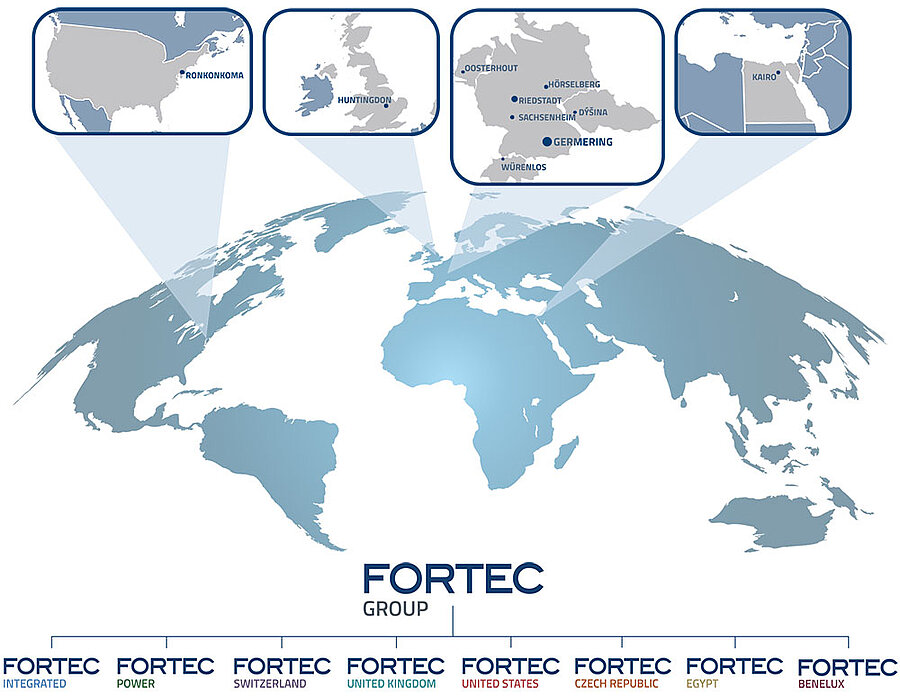
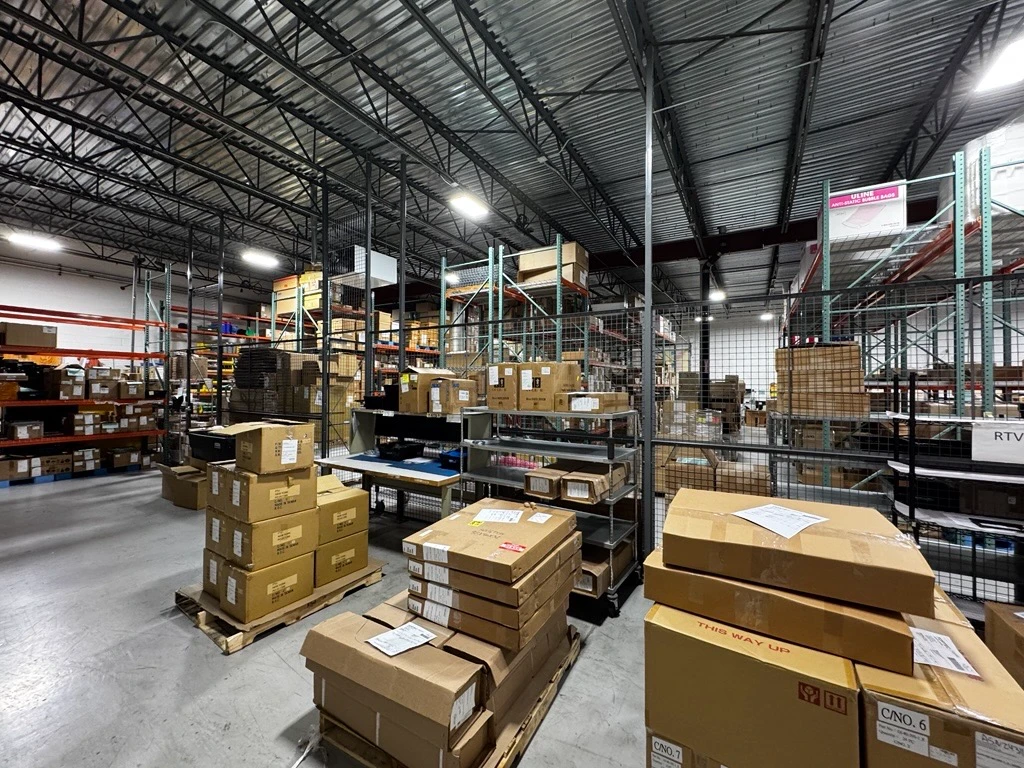
We are not a distributor. We design and manufacture display assemblies in Ronkonkoma. When a customer is in a sister company’s area, or in both of ours, we work with the FORTEC Group and deliver it as one project: the same VacuBond process runs in Germering and in the Czech Republic, where FORTEC Czech Republic also assembles displays with touchscreens.
PCAP Touchscreen FAQs
What sizes do PCAP touchscreens come in?
Standard from 3.2 to 65 inches, and custom from 2.2 inches. Custom sizes are built around the display and the cover glass the product needs.
What interface does a PCAP touch controller use?
USB, I²C, or RS232. Controllers are also available chip-on-flex, mounted on the touchscreen’s flex cable, and the position of the flex tail can be customized to fit the enclosure.
Which gloves can a PCAP touchscreen work with?
From two layers of surgical latex to ESD textile, firefighter, chemical-resistant, and chain-mail gloves. Each takes its own controller programming, so the gloves an operator will wear are part of the specification.
How thick can the cover glass be on a PCAP touchscreen?
Up to 15 mm of glass, or up to 4 mm of PMMA (acrylic), depending on the touchscreen. Our Infinite Touch Design films take a cover glass up to 10 mm on some sizes. A new or thicker cover glass means retuning the touch controller, and we do that firmware tuning here in Ronkonkoma.
Planning a PCAP Touch Display Assembly?
Tell us where it has to work, and we will take it from there. We recommend the panel, touch construction, cover glass, and bonding for the application, tune the touch controller, handle the integration and the sourcing, and stay with the project from first samples to series production through our technical services. We also manage obsolescence for the life of the product. Get in touch about your project.
Related: How Do You Design a Display for Harsh Environments?
Which Industries Does FORTEC US Serve?
November 3, 2026
Bringing AI to the Point of Care: Does Your Next Medical Device Need an NPU?
November 2, 2026
What Does the FORTEC Group Mean for US Customers?
October 30, 2026
Is FORTEC US a Distributor? What a Value-Added Display Supplier Does
October 29, 2026
Who Is FORTEC US?
October 28, 2026
Which Optical Bonding Material Is Best: Silicone OCA, Acrylic OCA, or LOCA?
October 15, 2026