
What Do congatec Computer-on-Modules Offer an OEM Design?
July 9, 2025
A congatec computer-on-module puts the processor, memory, and core interfaces on a small standard module that plugs into a carrier board designed for the application. congatec is a long-standing partner of the FORTEC Group: in 2023 it gave FORTEC Integrated (formerly Distec) its “Major Design Win 2022” award for design work on new customer projects. We supply, integrate, and support congatec modules and boards from Ronkonkoma, New York.
Which SMARC modules suit compact, low-power designs?
SMARC 2.1 modules measure only 82 x 50 mm, which makes them a fit for space-constrained designs. Two generations are current:
- The conga-SA8 uses Intel Amston Lake: Atom x7000RE or Core i3 processors, up to 16 GB of LPDDR5 at up to 4,800 MT/s, VNNI AI acceleration, and Intel Gen12 UHD graphics with up to 32 execution units. Its interfaces include USB 3.2 Gen2, HDMI 2.0, PCIe, eMMC, TPM 2.0 and eDP 1.4, and it runs from -40 to +85°C, for Industry 4.0, edge computing, and AI-enabled systems.
- The conga-SA7 uses Intel Elkhart Lake: Atom x6000E, Pentium, or Celeron processors. It runs fanless, withstands vibration, and comes in an industrial -40 to +85°C version and a commercial 0 to +60°C version. Its 314-pin MXM3 connector carries DP++, two Gigabit LAN ports with TSN, two USB 3.1 Gen2, six USB 2.0, SATA, up to four PCIe lanes, four UARTs, I2C, and two CAN interfaces, with Wi-Fi/Bluetooth, LVDS, and a second DP++ as options. At launch in 2022, congatec scheduled it for availability until at least 2030.
Carrier boards from congatec, such as the conga-SEVAL for SMARC modules, shorten the path from evaluation to a first prototype.
Which module suits graphics-intensive medical imaging?
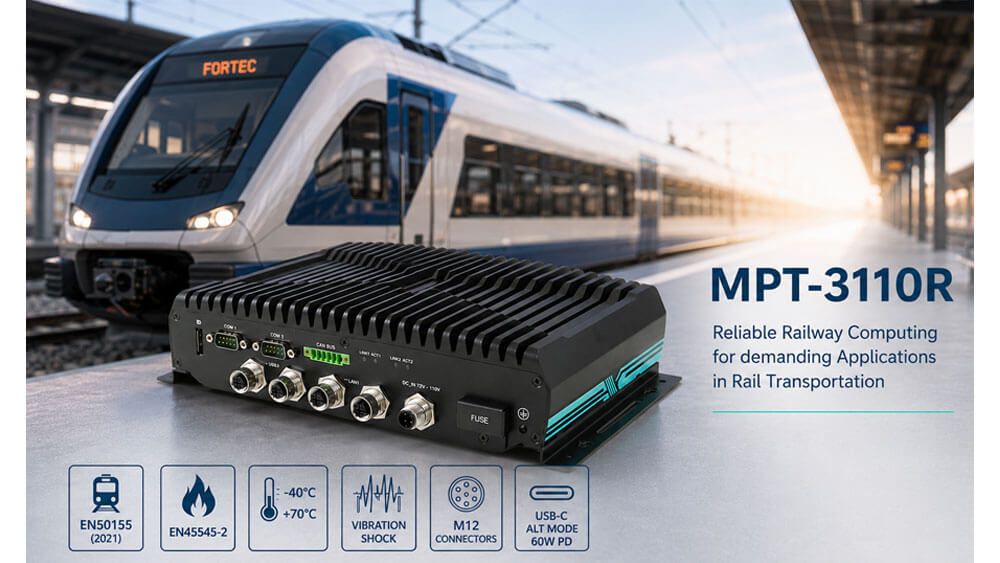
A COM Express module with strong integrated graphics, such as the conga-TC700. This COM Express Compact module uses Intel Core Ultra processors of the Meteor Lake series, with integrated Intel Arc graphics that render complex 3D visualizations and demanding image processing smoothly. It supports up to 96 GB of RAM and is designed for long-term availability, so a medical device can be built and serviced on the same platform for many years. Imaging, endoscopy, and diagnostic systems are typical uses. For railway and other high-stress environments, see our post on railway-certified computers, which covers the rugged conga-TC675r.
What if the design needs a complete board instead of a module?
congatec also builds single board computers. The conga-PA7 is a 2.5-inch Pico-ITX board of 100 x 72 mm for -40 to +85°C, with long-term available Intel Atom x6000E, Pentium, and Celeron J and N processors. It offers:
- Up to 16 GB of onboard LPDDR4x memory and up to 128 GB of onboard eMMC.
- Two Gigabit Ethernet ports with TSN support, out-of-band management, and real-time triggering.
- Two M.2 sockets, 2x USB 3.1, 2x USB 2.0, 2x RS-232/422/485, optional CAN bus, GPIOs, and a 12 V input.
- Display output over 48-bit LVDS, DisplayPort, or USB-C, with eDP as an option.
For fanless operation, a heatsink or heatspreader integrates it into the existing cooling concept, and its low power consumption makes it a fast, cost-efficient start for application development.
How do we take a congatec design into production?
By delivering the module as part of a complete, working kit. We supply the module or board with qualified RAM, SSD, display, touchscreen, and cables, with the operating system pre-installed, and where none of the standard options fits, our hardware, software, and mechanical engineers develop a fully custom solution. Tell us what the device has to do, and we will take it from there: we recommend the module, integrate it with the display assembly and power supply, and stay with the project from first samples to series production, backed by our technical services.